Redhat Developers  Logo
  • AI

    Get started with AI

    • Red Hat AI
      Accelerate the development and deployment of enterprise AI solutions.
    • AI learning hub
      Explore learning materials and tools, organized by task.
    • AI interactive demos
      Click through scenarios with Red Hat AI, including training LLMs and more.
    • AI/ML learning paths
      Expand your OpenShift AI knowledge using these learning resources.
    • AI quickstarts
      Focused AI use cases designed for fast deployment on Red Hat AI platforms.
    • No-cost AI training
      Foundational Red Hat AI training.

    Featured resources

    • OpenShift AI learning
    • Open source AI for developers
    • AI product application development
    • Open source-powered AI/ML for hybrid cloud
    • AI and Node.js cheat sheet

    Red Hat AI Factory with NVIDIA

    • Red Hat AI Factory with NVIDIA is a co-engineered, enterprise-grade AI solution for building, deploying, and managing AI at scale across hybrid cloud environments.
    • Explore the solution
  • Learn

    Self-guided

    • Documentation
      Find answers, get step-by-step guidance, and learn how to use Red Hat products.
    • Learning paths
      Explore curated walkthroughs for common development tasks.
    • Guided learning
      Receive custom learning paths powered by our AI assistant.
    • See all learning

    Hands-on

    • Developer Sandbox
      Spin up Red Hat's products and technologies without setup or configuration.
    • Interactive labs
      Learn by doing in these hands-on, browser-based experiences.
    • Interactive demos
      Click through product features in these guided tours.

    Browse by topic

    • AI/ML
    • Automation
    • Java
    • Kubernetes
    • Linux
    • See all topics

    Training & certifications

    • Courses and exams
    • Certifications
    • Skills assessments
    • Red Hat Academy
    • Learning subscription
    • Explore training
  • Build

    Get started

    • Red Hat build of Podman Desktop
      A downloadable, local development hub to experiment with our products and builds.
    • Developer Sandbox
      Spin up Red Hat's products and technologies without setup or configuration.

    Download products

    • Access product downloads to start building and testing right away.
    • Red Hat Enterprise Linux
    • Red Hat AI
    • Red Hat OpenShift
    • Red Hat Ansible Automation Platform
    • See all products

    Featured

    • Red Hat build of OpenJDK
    • Red Hat JBoss Enterprise Application Platform
    • Red Hat OpenShift Dev Spaces
    • Red Hat Developer Toolset

    References

    • E-books
    • Documentation
    • Cheat sheets
    • Architecture center
  • Community

    Get involved

    • Events
    • Live AI events
    • Red Hat Summit
    • Red Hat Accelerators
    • Community discussions

    Follow along

    • Articles & blogs
    • Developer newsletter
    • Videos
    • Github

    Get help

    • Customer service
    • Customer support
    • Regional contacts
    • Find a partner

    Join the Red Hat Developer program

    • Download Red Hat products and project builds, access support documentation, learning content, and more.
    • Explore the benefits

DevNation Live Blog: fabric8-ing Continous Improvement with Kubernetes and Jenkins Pipeline

June 30, 2016
Salem Elrahal
Related topics:
CI/CDContainersDevOps

    I'm sure you have heard and read a lot about microservices in the recent past  and how they are here to defend our end users from the horrible monolith. Breaking an application up into many components is a great start, but to take your organization to the next level requires a platform focused on integrating microservices into your continuous improvement process. Red Hat's James Rawlings & James Strachan led us through achieving our new goal of continuous delivery with containerized microservices. The way to go fast while developing is ensuring that all microservices have their own release cycle. Splitting your team up to align with your microservices will allow faster changes, the ultimate goal. In order to take advantage of many rapid releases your deployment and testing processes must be automated. Automating your build process and creating continuous feedback loops is the way to go.
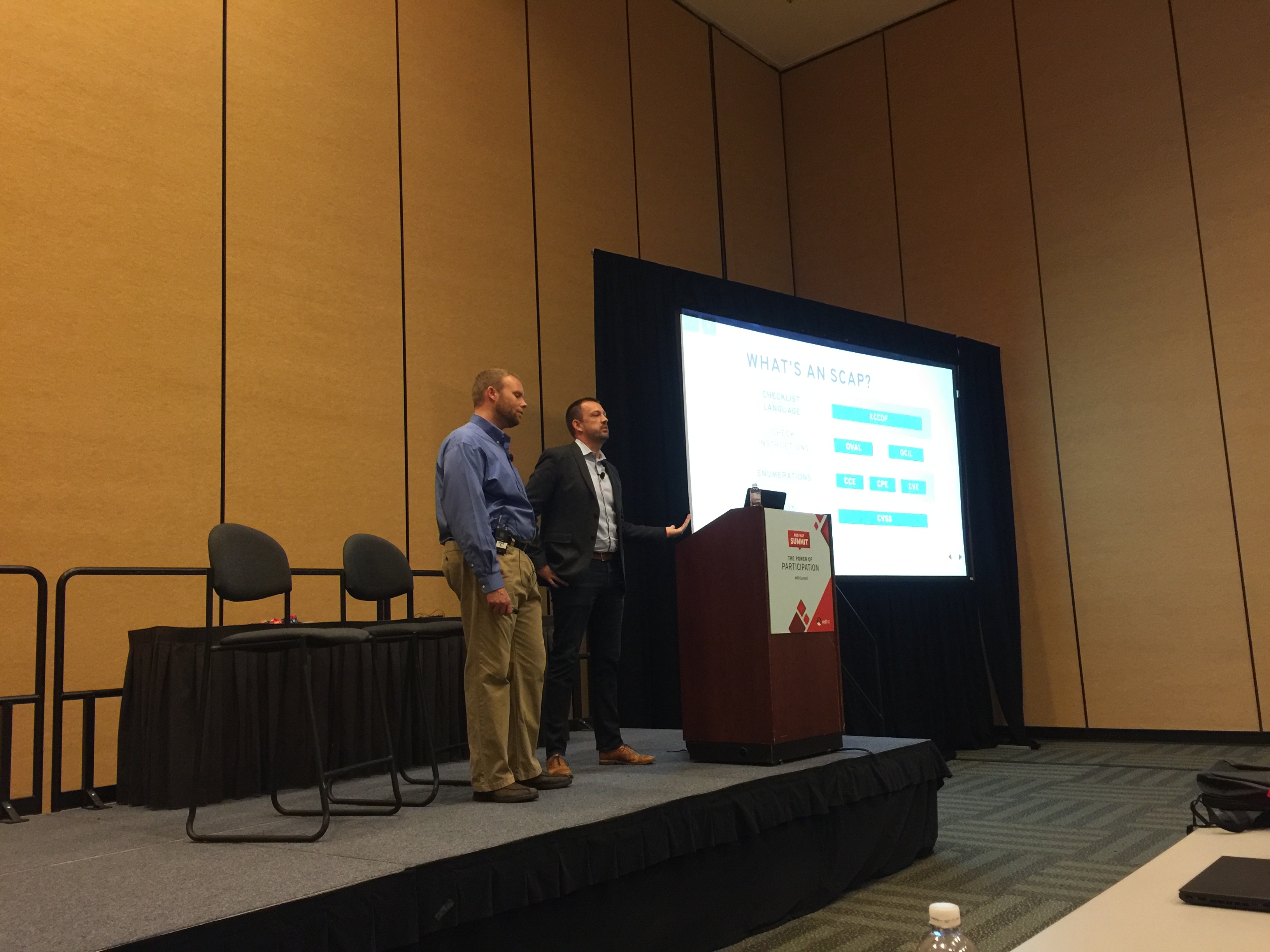
    Fabric8 enables you to create microservices, build immutable containers, perform rolling upgrades across runtime environments. Your services gain capabilities for service discovery and scaling, management and feedback. As a platform, it will automate many of the tasks your team is performing today like connecting Jenkins to your Git repository and deploying the new build to a testing environment.

    The other presenter, also named James, then took the stage and walked us through a great demo showing Fabric8 running on the Google Compute Engine. Using the kubectl tool James connected the  GCE cluster directly to his Kubernetes cluster. Using a few simple command he created and deployed the Fabric8 components, and was editing, building, and deploying a Java application (using Camel!) in no time. Monitoring came out of the box with Kibana for visualizing log events across pods. Fabric8 will even help coordinate a rolling upgrade of a new version of the application.

    Then we got a detailed overview of the three big underlying components powering Fabric8; Docker, Kubernetes, and Jenkins. There are several features Fabric8 adds on top of these three giants like re-usable pipelines to make the platform work for you. Fabric8 makes use of many other services such as: ElasticSearch for storing logs, Kibana for viewing those logs, Prometheus for service monitoring and metrics with a Grafana frontend. Having the logs is great, but Fabric8 builds on top of that by using Zipkin for fine-grained tracing between microservices.

    I'm looking forward to hearing more from the Fabric8 team about continuing to provide a platform for microservices.

    Last updated: March 16, 2018

    Recent Posts

    • Red Hat Hardened Images: Top 5 benefits for software developers

    • How EvalHub manages two-layer Kubernetes control planes

    • Tekton joins the CNCF as an incubating project

    • Federated identity across the hybrid cloud using zero trust workload identity manager

    • Confidential virtual machine storage attack scenarios

    Red Hat Developers logo LinkedIn YouTube Twitter Facebook

    Platforms

    • Red Hat AI
    • Red Hat Enterprise Linux
    • Red Hat OpenShift
    • Red Hat Ansible Automation Platform
    • See all products

    Build

    • Developer Sandbox
    • Developer tools
    • Interactive tutorials
    • API catalog

    Quicklinks

    • Learning resources
    • E-books
    • Cheat sheets
    • Blog
    • Events
    • Newsletter

    Communicate

    • About us
    • Contact sales
    • Find a partner
    • Report a website issue
    • Site status dashboard
    • Report a security problem

    RED HAT DEVELOPER

    Build here. Go anywhere.

    We serve the builders. The problem solvers who create careers with code.

    Join us if you’re a developer, software engineer, web designer, front-end designer, UX designer, computer scientist, architect, tester, product manager, project manager or team lead.

    Sign me up

    Red Hat legal and privacy links

    • About Red Hat
    • Jobs
    • Events
    • Locations
    • Contact Red Hat
    • Red Hat Blog
    • Inclusion at Red Hat
    • Cool Stuff Store
    • Red Hat Summit
    © 2026 Red Hat

    Red Hat legal and privacy links

    • Privacy statement
    • Terms of use
    • All policies and guidelines
    • Digital accessibility

    Chat Support

    Please log in with your Red Hat account to access chat support.