
Developer Advocate
Cedric Clyburn
Cedric Clyburn (@cedricclyburn), Senior Developer Advocate at Red Hat, is an enthusiastic software technologist with a background in Kubernetes, DevOps, and container tools. He has experience speaking and organizing conferences including DevNexus, WeAreDevelopers, The Linux Foundation, KCD NYC, and more. Cedric loves all things open-source, and works to make developer's lives easier! Based out of New York.
Cedric Clyburn's contributions
Blog
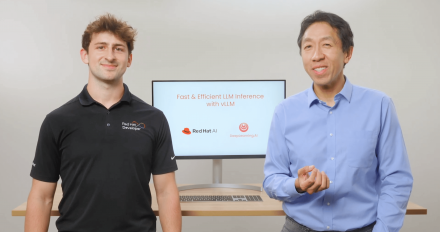
Learn to optimize, deploy, and benchmark LLMs with vLLM: A New Free Course
Red Hat and DeepLearning.AI have released a free hands-on course on the full LLM
Article
MCP servers vs. skills: Choosing the right context for your AI
Learn how to extend your large language model's capabilities with Model Context Protocol (MCP) servers and skills.

Article
Build resilient guardrails for OpenClaw AI agents on Kubernetes
Learn how to build security hygiene into OpenClaw by using containers for isolation, role-based access control (RBAC) for user access permissions, and secrets for sensitive information. This article explores how to use infrastructure powered by open source technology to help protect these workflows.

Article
Building effective AI agents with Model Context Protocol (MCP)
Learn how Model Context Protocol (MCP) enhances agentic AI in OpenShift AI, enabling models to call tools, services, and more from an AI application.
Article
The state of open source AI models in 2025
Discover 2025's leading open models, including Kimi K2 and DeepSeek. Learn how these models are transforming AI applications and how you can start using them.
Article
3 MCP servers you should be using (safely)
Explore the benefits of using Kubernetes, Context7, and GitHub MCP servers to diagnose issues, access up-to-date documentation, and interact with repositories.
 Video
Video
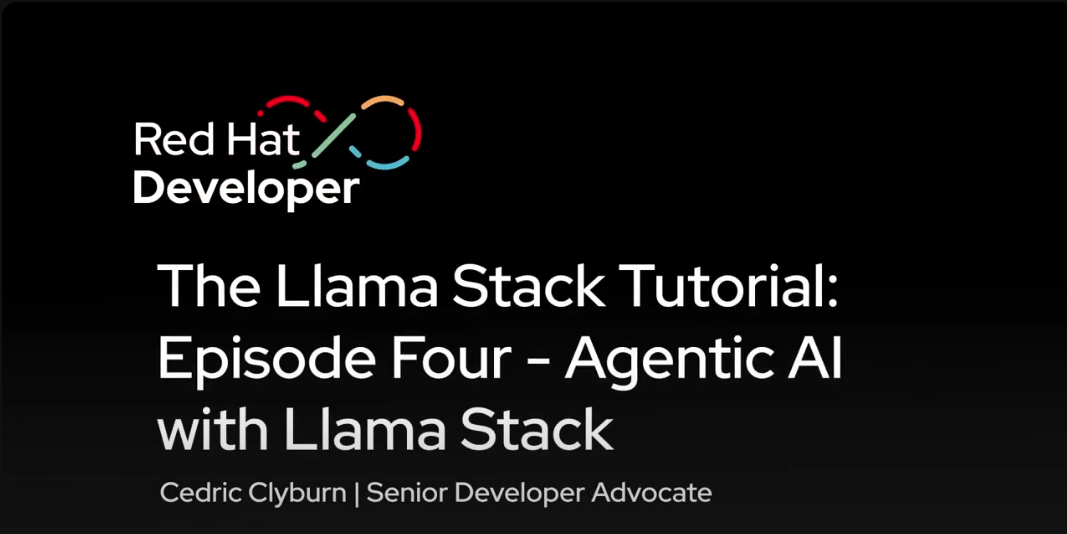
The Llama Stack Tutorial: Episode Four - Agentic AI with Llama Stack
AI agents are where things get exciting! In this episode of The Llama Stack Tutorial, we'll dive into Agentic AI with Llama Stack—showing you how to give your LLM real-world capabilities like searching the web, pulling in data, and connecting to external APIs. You'll learn how agents are built with models, instructions, tools, and safety shields, and see live demos of using the Agentic API, running local models, and extending functionality with Model Context Protocol (MCP) servers.Join Senior Developer Advocate Cedric Clyburn as we learn all things Llama Stack! Next episode? Guardrails, evals, and more!

Article
How to run OpenAI's gpt-oss models locally with RamaLama
Learn to run and serve OpenAI's gpt-oss models locally with RamaLama, a CLI tool that automates secure, containerized deployment and GPU optimization.

Learn to optimize, deploy, and benchmark LLMs with vLLM: A New Free Course
Red Hat and DeepLearning.AI have released a free hands-on course on the full LLM

MCP servers vs. skills: Choosing the right context for your AI
Learn how to extend your large language model's capabilities with Model Context Protocol (MCP) servers and skills.

Build resilient guardrails for OpenClaw AI agents on Kubernetes
Learn how to build security hygiene into OpenClaw by using containers for isolation, role-based access control (RBAC) for user access permissions, and secrets for sensitive information. This article explores how to use infrastructure powered by open source technology to help protect these workflows.

Building effective AI agents with Model Context Protocol (MCP)
Learn how Model Context Protocol (MCP) enhances agentic AI in OpenShift AI, enabling models to call tools, services, and more from an AI application.
The state of open source AI models in 2025
Discover 2025's leading open models, including Kimi K2 and DeepSeek. Learn how these models are transforming AI applications and how you can start using them.
3 MCP servers you should be using (safely)
Explore the benefits of using Kubernetes, Context7, and GitHub MCP servers to diagnose issues, access up-to-date documentation, and interact with repositories.
The Llama Stack Tutorial: Episode Four - Agentic AI with Llama Stack
AI agents are where things get exciting! In this episode of The Llama Stack Tutorial, we'll dive into Agentic AI with Llama Stack—showing you how to give your LLM real-world capabilities like searching the web, pulling in data, and connecting to external APIs. You'll learn how agents are built with models, instructions, tools, and safety shields, and see live demos of using the Agentic API, running local models, and extending functionality with Model Context Protocol (MCP) servers.Join Senior Developer Advocate Cedric Clyburn as we learn all things Llama Stack! Next episode? Guardrails, evals, and more!

How to run OpenAI's gpt-oss models locally with RamaLama
Learn to run and serve OpenAI's gpt-oss models locally with RamaLama, a CLI tool that automates secure, containerized deployment and GPU optimization.

