Redhat Developers  Logo
  • AI

    Get started with AI

    • Red Hat AI
      Accelerate the development and deployment of enterprise AI solutions.
    • AI learning hub
      Explore learning materials and tools, organized by task.
    • AI interactive demos
      Click through scenarios with Red Hat AI, including training LLMs and more.
    • AI/ML learning paths
      Expand your OpenShift AI knowledge using these learning resources.
    • AI quickstarts
      Focused AI use cases designed for fast deployment on Red Hat AI platforms.
    • No-cost AI training
      Foundational Red Hat AI training.

    Featured resources

    • OpenShift AI learning
    • Open source AI for developers
    • AI product application development
    • Open source-powered AI/ML for hybrid cloud
    • AI and Node.js cheat sheet

    Red Hat AI Factory with NVIDIA

    • Red Hat AI Factory with NVIDIA is a co-engineered, enterprise-grade AI solution for building, deploying, and managing AI at scale across hybrid cloud environments.
    • Explore the solution
  • Learn

    Self-guided

    • Documentation
      Find answers, get step-by-step guidance, and learn how to use Red Hat products.
    • Learning paths
      Explore curated walkthroughs for common development tasks.
    • Guided learning
      Receive custom learning paths powered by our AI assistant.
    • See all learning

    Hands-on

    • Developer Sandbox
      Spin up Red Hat's products and technologies without setup or configuration.
    • Interactive labs
      Learn by doing in these hands-on, browser-based experiences.
    • Interactive demos
      Click through product features in these guided tours.

    Browse by topic

    • AI/ML
    • Automation
    • Java
    • Kubernetes
    • Linux
    • See all topics

    Training & certifications

    • Courses and exams
    • Certifications
    • Skills assessments
    • Red Hat Academy
    • Learning subscription
    • Explore training
  • Build

    Get started

    • Red Hat build of Podman Desktop
      A downloadable, local development hub to experiment with our products and builds.
    • Developer Sandbox
      Spin up Red Hat's products and technologies without setup or configuration.

    Download products

    • Access product downloads to start building and testing right away.
    • Red Hat Enterprise Linux
    • Red Hat AI
    • Red Hat OpenShift
    • Red Hat Ansible Automation Platform
    • See all products

    Featured

    • Red Hat build of OpenJDK
    • Red Hat JBoss Enterprise Application Platform
    • Red Hat OpenShift Dev Spaces
    • Red Hat Developer Toolset

    References

    • E-books
    • Documentation
    • Cheat sheets
    • Architecture center
  • Community

    Get involved

    • Events
    • Live AI events
    • Red Hat Summit
    • Red Hat Accelerators
    • Community discussions

    Follow along

    • Articles & blogs
    • Developer newsletter
    • Videos
    • Github

    Get help

    • Customer service
    • Customer support
    • Regional contacts
    • Find a partner

    Join the Red Hat Developer program

    • Download Red Hat products and project builds, access support documentation, learning content, and more.
    • Explore the benefits

A-MQ 7 Alpha is ready!

July 18, 2016
Christina Lin
Related topics:
Containers
Related products:
Streams for Apache Kafka

    I am sure this is the moment we have all been waiting for a long time, JBoss A-MQ 7 is finally out and is currently in Alpha. A-MQ is a fast and flexible messaging platform that reliably delivers information and easily integrates the various components in your application environments.

    A-MQ 7 consists of several new components and features, it is base on Project Apache ActiveMQ Artemis. The code base was donated by HornetQ. Having high performance journal base on NIO implementation, allows A-MQ 7 to become a fast , high performance and reliable messaging platform.  Rather than relying other persistence storage it is very highly optimized for general message use cases. The message broker as always allows you to balance load across a cluster of brokers, the balancing of the message not only distributed the incoming message to brokers sequentially but also takes into the account of the number of consumers and selectors in the broker so the performance can achieved even distribution of the load.
    The support for Cross-language and Multi-protocol in A-MQ 7 allows many more native connectivity from applications written in Java (JMS), C++, Python, JavaScript/Node.js, .NET. Multiple transport protocols for exchanging data with AMQP 1.0, MQTT, STOMP, OpenWire, HornetQ Core.

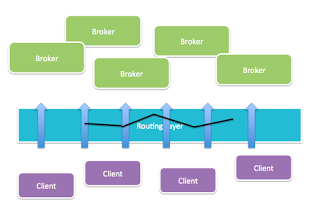
    One of the bigger innovation of A-MQ 7 is the introduction of Interconnects, Interconnect is a message router you can use to build large-scale messaging networks. A-MQ Interconnect uses the AMQP protocol to create a redundant application-level messaging network. It works as an interconnect layer between messaging clients and their brokers. And why do we need it? The beauty of the interconnect allows you to solve the good old problems when we only have multiple brokers, there could be too many clients trying to connect to to a single point of brokers, one broker could have too many queues create, one of a broker handling too much throughput comparing with the others, have interconnect is to add another routing layer before your broker, it is flexible nature allows messages to flow through it and evenly spread the load. It automatically find the fasting routing path so the message will arrive efficiently. And since it's base on AMQP protocols, you can set your own selector on it base on your messaging routing logic.
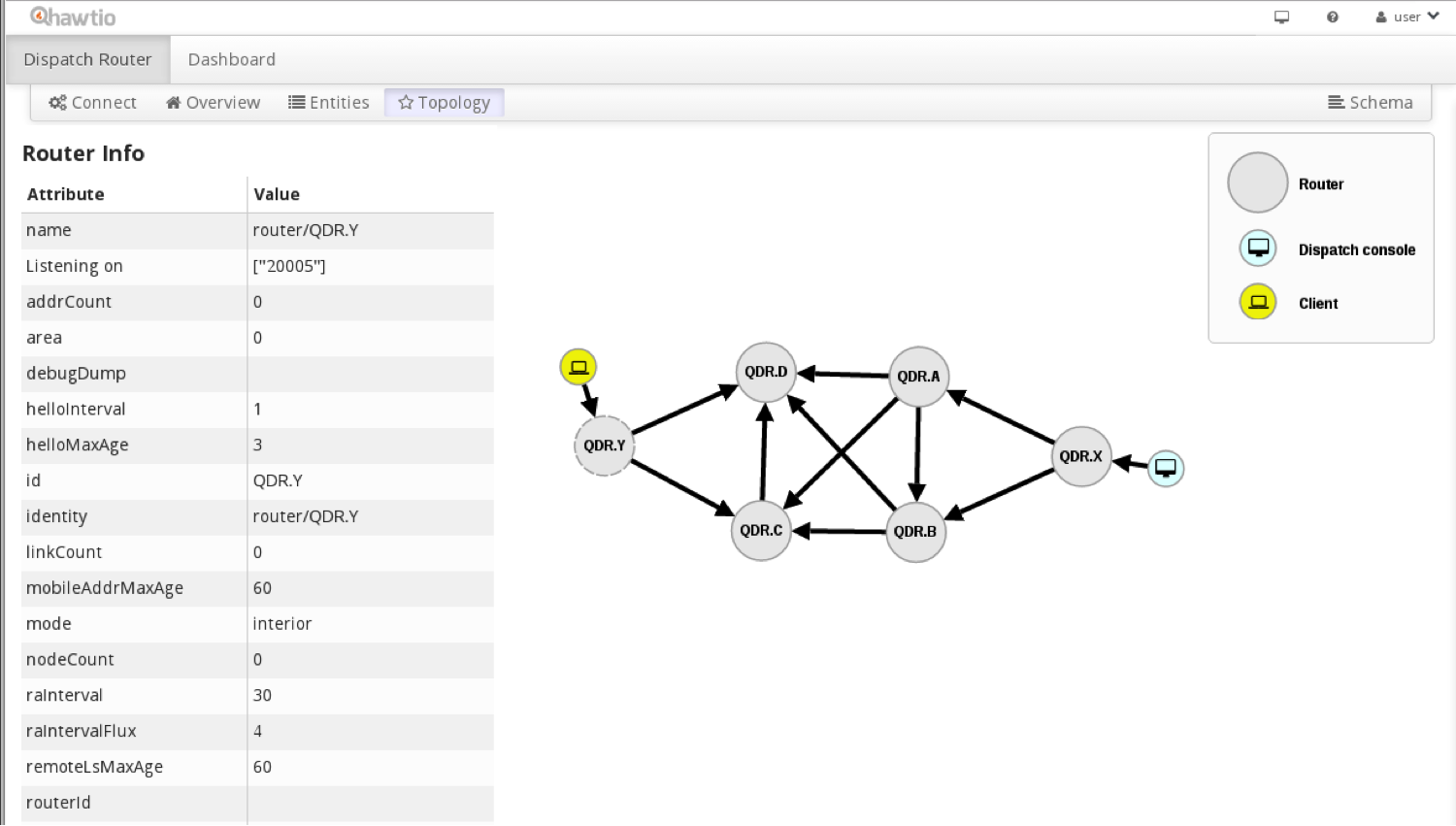

    And as always, we still have Hawtio as the management tooling, where you can see the details of how the brokers are doing now.

    For those of you who uses the old version of A-MQ or HornetQ, A-MQ 7 support both A-MQ 6.x and HornetQ clients for backward compatibility.

    To get your hands on the latest Alpha version of JBoss A-MQ 7, please go to https://developers.redhat.com/products/amq/download

    Last updated: September 19, 2023

    Recent Posts

    • Red Hat Hardened Images: Top 5 benefits for software developers

    • How EvalHub manages two-layer Kubernetes control planes

    • Tekton joins the CNCF as an incubating project

    • Federated identity across the hybrid cloud using zero trust workload identity manager

    • Confidential virtual machine storage attack scenarios

    Red Hat Developers logo LinkedIn YouTube Twitter Facebook

    Platforms

    • Red Hat AI
    • Red Hat Enterprise Linux
    • Red Hat OpenShift
    • Red Hat Ansible Automation Platform
    • See all products

    Build

    • Developer Sandbox
    • Developer tools
    • Interactive tutorials
    • API catalog

    Quicklinks

    • Learning resources
    • E-books
    • Cheat sheets
    • Blog
    • Events
    • Newsletter

    Communicate

    • About us
    • Contact sales
    • Find a partner
    • Report a website issue
    • Site status dashboard
    • Report a security problem

    RED HAT DEVELOPER

    Build here. Go anywhere.

    We serve the builders. The problem solvers who create careers with code.

    Join us if you’re a developer, software engineer, web designer, front-end designer, UX designer, computer scientist, architect, tester, product manager, project manager or team lead.

    Sign me up

    Red Hat legal and privacy links

    • About Red Hat
    • Jobs
    • Events
    • Locations
    • Contact Red Hat
    • Red Hat Blog
    • Inclusion at Red Hat
    • Cool Stuff Store
    • Red Hat Summit
    © 2026 Red Hat

    Red Hat legal and privacy links

    • Privacy statement
    • Terms of use
    • All policies and guidelines
    • Digital accessibility

    Chat Support

    Please log in with your Red Hat account to access chat support.