AI
  • Get started with AI

    • Red Hat AI

      Accelerate the development and deployment of enterprise AI solutions.

    • AI learning hub

      Explore learning materials and tools, organized by task.

    • AI interactive demos

      Click through scenarios with Red Hat AI, including training LLMs and more.

    • AI/ML learning paths

      Expand your Red Hat OpenShift AI knowledge using these learning resources.

    • AI quickstarts

      Focused AI use cases designed for fast deployment on Red Hat AI platforms.

    • No-cost AI training

      Foundational Red Hat AI training.

  • Featured resources

    • Red Hat OpenShift AI
    • Open source AI for developers
    • AI product application development
    • Open source-powered AI/ML for hybrid cloud
    • AI and Node.js cheat sheet

Red Hat AI Factory with NVIDIA

Red Hat AI Factory with NVIDIA is a co-engineered, enterprise-grade AI solution for building, deploying, and managing AI at scale across hybrid cloud environments.

Learn
  • Self-guided

    • Documentation

      Find answers, get step-by-step guidance, and learn how to use Red Hat products.

    • Learning paths

      Explore curated walkthroughs for common development tasks.

    • Guided learning

      Receive custom learning paths powered by our AI assistant.

    • See all learning
  • Hands-on

    • Developer Sandbox

      Spin up Red Hat's products and technologies without setup or configuration.

    • Interactive labs

      Learn by doing in these hands-on, browser-based experiences.

    • Interactive demos

      Click through product features in these guided tours.

  • Browse by topic

    • AI/ML
    • Automation
    • Java
    • Kubernetes
    • Linux
    • See all topics
  • Training & certifications

    • Courses and exams
    • Certifications
    • Skills assessments
    • Red Hat Academy
    • Learning subscription
    • Explore training
Build
  • Get started

    • Red Hat build of Podman Desktop

      A downloadable, local development hub to experiment with our products and builds.

    • Developer Sandbox

      Spin up Red Hat's products and technologies without setup or configuration.

  • Download products

    • Red Hat Enterprise Linux
    • Red Hat AI
    • Red Hat OpenShift
    • Red Hat Ansible Automation Platform
    • See all products
  • Featured

    • Red Hat build of OpenJDK
    • Red Hat JBoss Enterprise Application Platform
    • Red Hat OpenShift Dev Spaces
    • Red Hat Developer Toolset
  • References

    • E-books
    • Documentation
    • Cheat sheets
    • Architecture center
Community
  • Get involved

    • Events
    • Live AI events
    • Red Hat Summit
    • Red Hat Accelerators
    • Community discussions
  • Follow along

    • Articles & blogs
    • Developer newsletter
    • Videos
    • Github
  • Get help

    • Customer service
    • Customer support
    • Regional contacts
    • Find a partner

Join the Red Hat Developer program

Download Red Hat products and project builds, access support documentation, learning content, and more.

ConsoleDocsSupport Search
New For you

Recommended

We'll recommend resources you may like as you browse. Try these suggestions for now.

  • Product downloads
  • Cheat sheets
  • Red Hat Developer learning portal
  • Developer blog
  • E-books
  • Developer Sandbox
Log in

Get more with a Red Hat Developer account

  • Product downloads
  • Console access
  • Event registration
  • Training & trials
Explore more account benefitsLog in or register

A subscription may be required for some services.

Contact us

Camel integration quarterly digest: Q1 2025

April 15, 2025
Ivo Bek Jon Anstey
Related topics:
Artificial intelligenceData integrationDeveloper productivityIntegrationApplication modernization
Related products:
Red Hat build of Apache CamelRed Hat Fuse

    Welcome to the Q1’25 edition of Red Hat’s quarterly newsletter all about Apache Camel! This series aims to share all noteworthy Camel goodness over the last quarter so you don’t miss a thing! Be sure to read the previous editions to catch up on all the exciting updates and insights in Q1, Q2, Q3, Q4 of 2024.

    Arcade Interactive Kaoto Demo

    Explore the fundamentals of Red Hat build of Apache Camel integration using Kaoto through our Interactive tutorial series. The series covers:

    1. Introduction to Kaoto and its capabilities to create Apache Camel projects
    2. Installation of the Kaoto VS Code extension
    3. Creation of initial Camel routes and execution
    4. Utilization of Kaoto’s visual Data Mapper
    5. Deployment of Apache Camel projects to OpenShift
    6. Exploration of AI-enabled integrations using Apache Camel
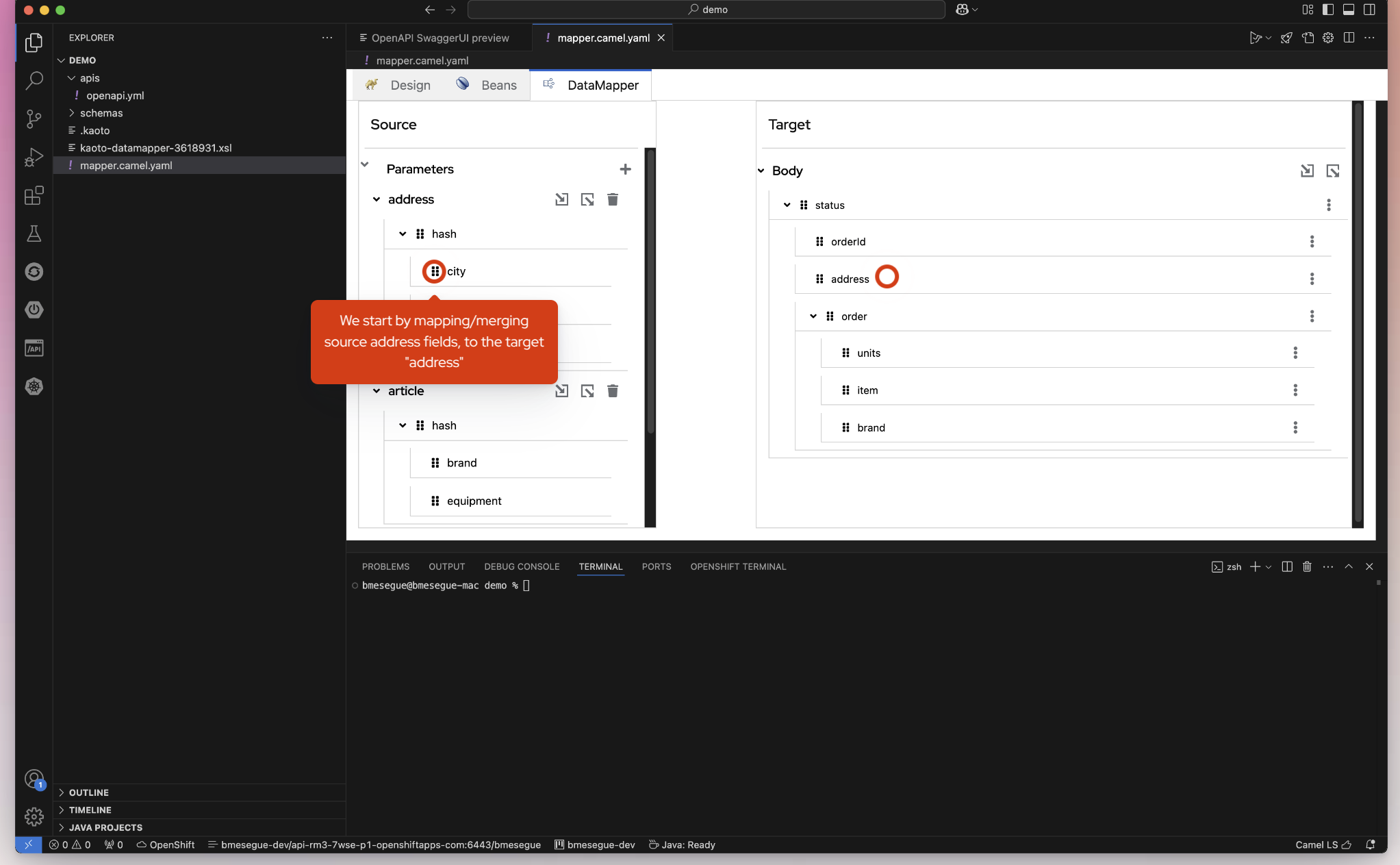
    Kaoto interactive demos

    Each chapter builds upon the previous, providing a comprehensive understanding of Kaoto’s capabilities in designing and implementing Apache Camel projects.

    Integration Partner Day in Brno

    In March, Red Hat hosted the Integration Partner Day in Brno, drawing 40 partners and customers for a deep dive into modern enterprise integration.

    Attendees explored the latest in Apache Camel, Apache Kafka, Kuadrant, OpenShift, and more through expert talks and hands-on demos. A major highlight were partner case studies showcasing real-world modernization journeys such as migrating from Boomi to Apache Camel and building agile integration services on OpenShift. These stories emphasized gradual transformation strategies and practical insights into managing change in complex environments.


    Wanaku.ai and MCP

    In March, we launched Wanaku, a new community project designed to connect agentic applications with enterprise systems via the Model Context Protocol (MCP). Think of Wanaku as a digital receptionist managing access and routing agents to the right enterprise resources.

    At its core, Wanaku links autonomous agents to a routing layer that interfaces with enterprise systems. It leverages Apache Camel integration services to expose parametrizable resource and tool integrations, enabling autonomous interaction for LLMs and agentic applications. 

    Each tool defines a distinct type of integration. For example, the tool get-information-about-specific-fruit uses an HTTP integration, specified via a URI template like Camel works:

    {
      "name" : "get-information-about-specific-fruit",
      "description" : "Get information about a specific fruit",
      "uri" : "https://www.fruityvice.com/api/fruit/{parameter.value('fruit')}",
      "type" : "http",
      "inputSchema" : {
        "type" : "object",
        "properties" : {
          "fruit" : {
            "type" : "string",
            "description" : "The fruit to get the information from"
          }
        },
        "required" : [ "fruit" ]
      }
    }

    Wanaku v0.0.4 adds support for MCP federation with third-party MCP servers, enabling access to over 4,000 MCP server implementations.

    Learn more about Wanaku at wanaku.ai

    Articles

    Dive into the latest developments within Apache Camel 4 through our curated selection of articles.

    Apache Camel AI: Inference via Model Serving #1: TorchServe 

    Tadayoshi Sato introduces the Camel TorchServe component, explaining how it facilitates running AI model inference on TorchServe within Camel applications. Learn how to integrate PyTorch-trained models into your Camel routes for AI-powered integrations.

    Apache Camel AI: Inference via Model Serving #2: TensorFlow Serving 

    Tadayoshi Sato explores the Camel TensorFlow Serving component, demonstrating how to leverage it for seamless AI model inference using TensorFlow Serving in your Camel applications. Discover how to incorporate TensorFlow-trained models into your Camel integration flows.

    Camel Observability Services 

    Pasquale Congiusti explains the new Camel Observability Services component, which aims to provide a unified way to observe Camel applications by integrating metrics, health checks, and traces. Find out how this component simplifies observability in distributed Camel architectures.

    Resolving LangChain4j AI services by name 

    Alexandre Gallice presents a new feature in Camel Quarkus that allows for resolving LangChain4j AI services by their bean name directly from Camel routes. Discover how this enhancement simplifies the invocation of AI services in Camel Quarkus applications.

    Toward better data extraction with structured output 

    Alexandre Gallice demonstrates the new structured output feature in Camel Quarkus LangChain4j, which leverages JSON schemas to improve the accuracy of data extraction from LLMs. Learn how this feature automatically constrains LLM output for more reliable data integration.

    Apache Camel 4.11 What's New 

    Claus Ibsen, Pasquale Congiusti, Federico Mariani, and Gregor Zurowski detail the new features and improvements included in the Apache Camel 4.11 release, covering areas such as Camel Core, JBang, SQL, Telemetry, Test, Spring Boot, and new components. Read more to discover the latest enhancements to the Camel integration framework.

    Demos and Presentations

    See Apache Camel 4 in action in the following new demos and presentations:

    • Kaoto - Integration Designer for Apache Camel interactive demos
    • Getting started with Wanaku - on v0.0.1. Recently we released v0.0.4 significantly simplifying getting started experience:
      • download and run cli 'wanaku start local'
      • open http://localhost:8080 to access Wanaku Console which includes simple LLMChat specifically designed for quick testing of the tools
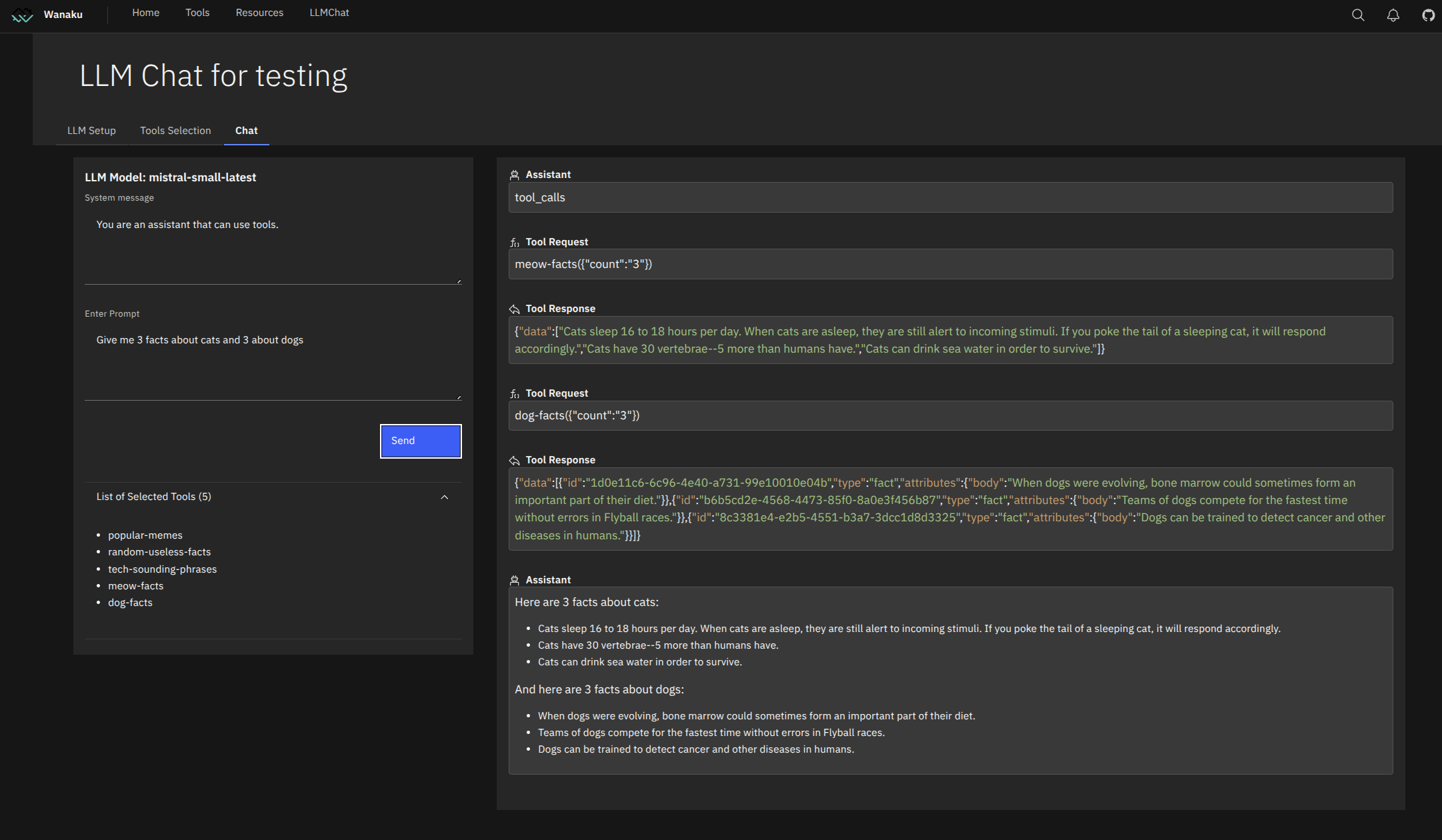
    Wanaku LLMChat

    Upcoming

    You may meet us at the upcoming conferences:

    April

    • April 16 - Devoxx France
      • Zineb Bendhiba and Clement Escoffier will present “Créer des Applications Intelligentes avec Quarkus et LangChain4j”

    May

    • May 8th - Devoxx UK
      • Bruno Meseguer and Markus Eisele will present “Enterprise Integration Is Dead! Long Live AI-Driven Integration with Apache Camel”
    • May 19-22 - Red Hat Summit

    June

    • June 5 - KCD Czech and Slovak
    • June 12-14 - DevConf.CZ in Czechia (Brno)

    Disclaimer: Please note the content in this blog post has not been thoroughly reviewed by the Red Hat Developer editorial team. Any opinions expressed in this post are the author's own and do not necessarily reflect the policies or positions of Red Hat.

    Recent Posts

    • Run Red Hat Enterprise Linux CoreOS on NVIDIA BlueField DPUs

    • Agent harness engineering: Separating model capabilities from enforcement

    • What's new for developers in Red Hat Enterprise Linux 10.3 and 9.9

    • Control multicluster costs with right-sizing in Red Hat Advanced Cluster Management 5

    • Lightbits is now certified for Red Hat OpenStack Services on OpenShift

    Red Hat Developers logo

    Platforms

    • Red Hat AI
    • Red Hat Enterprise Linux
    • Red Hat OpenShift
    • Red Hat Ansible Automation Platform
    • See all products

    Build

    • Developer Sandbox
    • Developer tools
    • Interactive tutorials
    • API catalog

    Quicklinks

    • Learning resources
    • E-books
    • Cheat sheets
    • Blog
    • Events
    • Newsletter

    Communicate

    • About us
    • Contact sales
    • Find a partner
    • Report a website issue
    • Site status dashboard
    • Report a security problem

    Red Hat Developer

    Build here. Go anywhere.

    We serve the builders. The problem solvers who create careers with code.

    Join us if you’re a developer, software engineer, web designer, front-end designer, UX designer, computer scientist, architect, tester, product manager, project manager or team lead.

    Sign me up

    Red Hat legal and privacy links

    • About Red Hat
    • Jobs
    • Events
    • Locations
    • Contact Red Hat
    • Red Hat Blog
    • Inclusion at Red Hat
    • Cool Stuff Store
    • Red Hat Summit
    © 2026 Red Hat

    Red Hat legal and privacy links

    • Privacy statement
    • Terms of use
    • All policies and guidelines
    • Digital accessibility
    Ask AI