Redhat Developers  Logo
  • AI

    Get started with AI

    • Red Hat AI
      Accelerate the development and deployment of enterprise AI solutions.
    • AI learning hub
      Explore learning materials and tools, organized by task.
    • AI interactive demos
      Click through scenarios with Red Hat AI, including training LLMs and more.
    • AI/ML learning paths
      Expand your OpenShift AI knowledge using these learning resources.
    • AI quickstarts
      Focused AI use cases designed for fast deployment on Red Hat AI platforms.
    • No-cost AI training
      Foundational Red Hat AI training.

    Featured resources

    • OpenShift AI learning
    • Open source AI for developers
    • AI product application development
    • Open source-powered AI/ML for hybrid cloud
    • AI and Node.js cheat sheet

    Red Hat AI Factory with NVIDIA

    • Red Hat AI Factory with NVIDIA is a co-engineered, enterprise-grade AI solution for building, deploying, and managing AI at scale across hybrid cloud environments.
    • Explore the solution
  • Learn

    Self-guided

    • Documentation
      Find answers, get step-by-step guidance, and learn how to use Red Hat products.
    • Learning paths
      Explore curated walkthroughs for common development tasks.
    • Guided learning
      Receive custom learning paths powered by our AI assistant.
    • See all learning

    Hands-on

    • Developer Sandbox
      Spin up Red Hat's products and technologies without setup or configuration.
    • Interactive labs
      Learn by doing in these hands-on, browser-based experiences.
    • Interactive demos
      Click through product features in these guided tours.

    Browse by topic

    • AI/ML
    • Automation
    • Java
    • Kubernetes
    • Linux
    • See all topics

    Training & certifications

    • Courses and exams
    • Certifications
    • Skills assessments
    • Red Hat Academy
    • Learning subscription
    • Explore training
  • Build

    Get started

    • Red Hat build of Podman Desktop
      A downloadable, local development hub to experiment with our products and builds.
    • Developer Sandbox
      Spin up Red Hat's products and technologies without setup or configuration.

    Download products

    • Access product downloads to start building and testing right away.
    • Red Hat Enterprise Linux
    • Red Hat AI
    • Red Hat OpenShift
    • Red Hat Ansible Automation Platform
    • See all products

    Featured

    • Red Hat build of OpenJDK
    • Red Hat JBoss Enterprise Application Platform
    • Red Hat OpenShift Dev Spaces
    • Red Hat Developer Toolset

    References

    • E-books
    • Documentation
    • Cheat sheets
    • Architecture center
  • Community

    Get involved

    • Events
    • Live AI events
    • Red Hat Summit
    • Red Hat Accelerators
    • Community discussions

    Follow along

    • Articles & blogs
    • Developer newsletter
    • Videos
    • Github

    Get help

    • Customer service
    • Customer support
    • Regional contacts
    • Find a partner

    Join the Red Hat Developer program

    • Download Red Hat products and project builds, access support documentation, learning content, and more.
    • Explore the benefits

Build an extendable multichannel messaging platform

July 2, 2024
Bruno Meseguer
Related topics:
Data integrationEvent-drivenIntegrationKafkaMicroservicesStream processing
Related products:
AMQ BrokerStreams for Apache KafkaRed Hat build of Apache CamelRed Hat Data GridRed Hat OpenShiftRed Hat OpenShift Data Foundation

    As the internet evolves and technologies and trends emerge, so do the ways people and organizations connect. Not only is digitalization transforming and automating processes, but social changes and events are also making an impact that shapes how we interact.

    Not so long ago, email and SMS messages started to replace phone conversations, and soon after, instant messaging platforms gained popularity over the tools that came before it. Today, there is a big landscape of messaging platforms, and often people feel divided on which one to use to communicate with friends and family.

    In the professional field, organizations usually mandate one common communication platform, but often more than one survives, fragmenting work discussions between them.

    Figure 1 illustrates an employee using multiple communication systems to liaise with different groups and partners, inside or outside the organization.
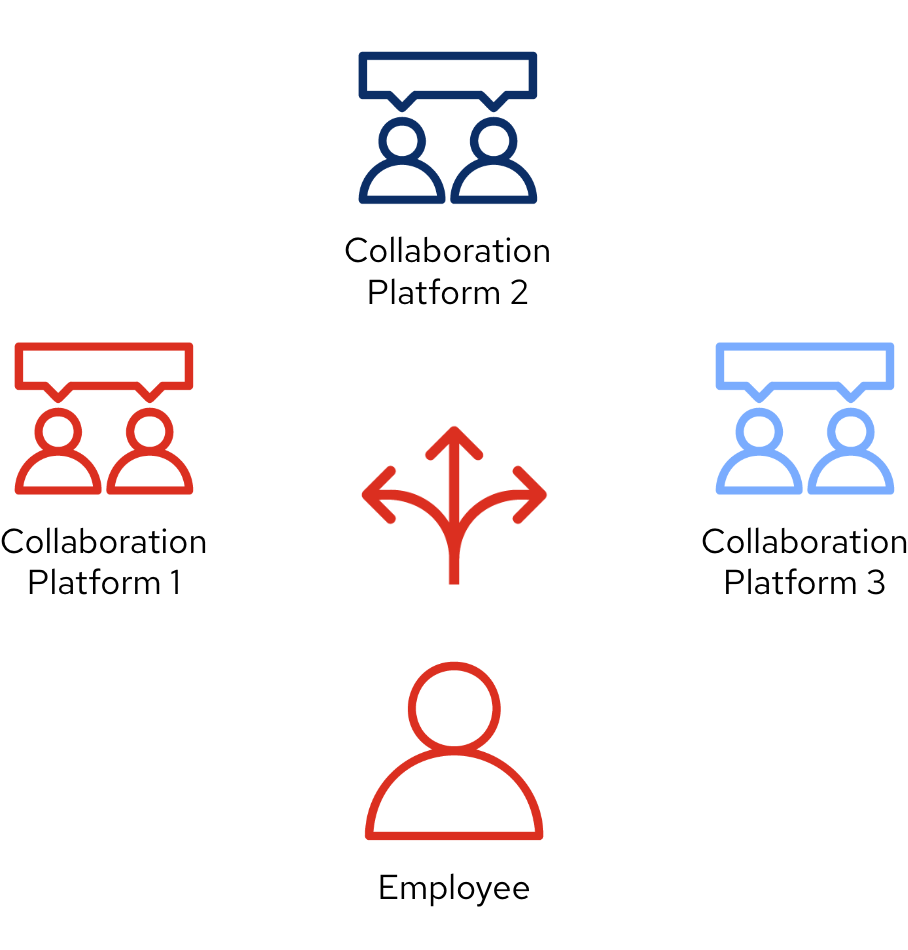
    Figure 1: An employee uses different collaboration tools to communicate with peers.

    The problem that arises in this scenario is that it causes communication degradation between team members and departments, inefficient interactions, and misunderstandings, resulting in a loss of productivity and ultimately costing the organization time and money.

    The solution pattern introduced in this article proposes an implementation to build a platform that addresses the problem by unifying all systems as one and plugging in additional services to enrich the platform further.

    The unified platform illustrated in Figure 2 integrates all platforms to operate as one and would provide new collaboration possibilities and capabilities, such as helping comply with government regulations on data privacy and security.
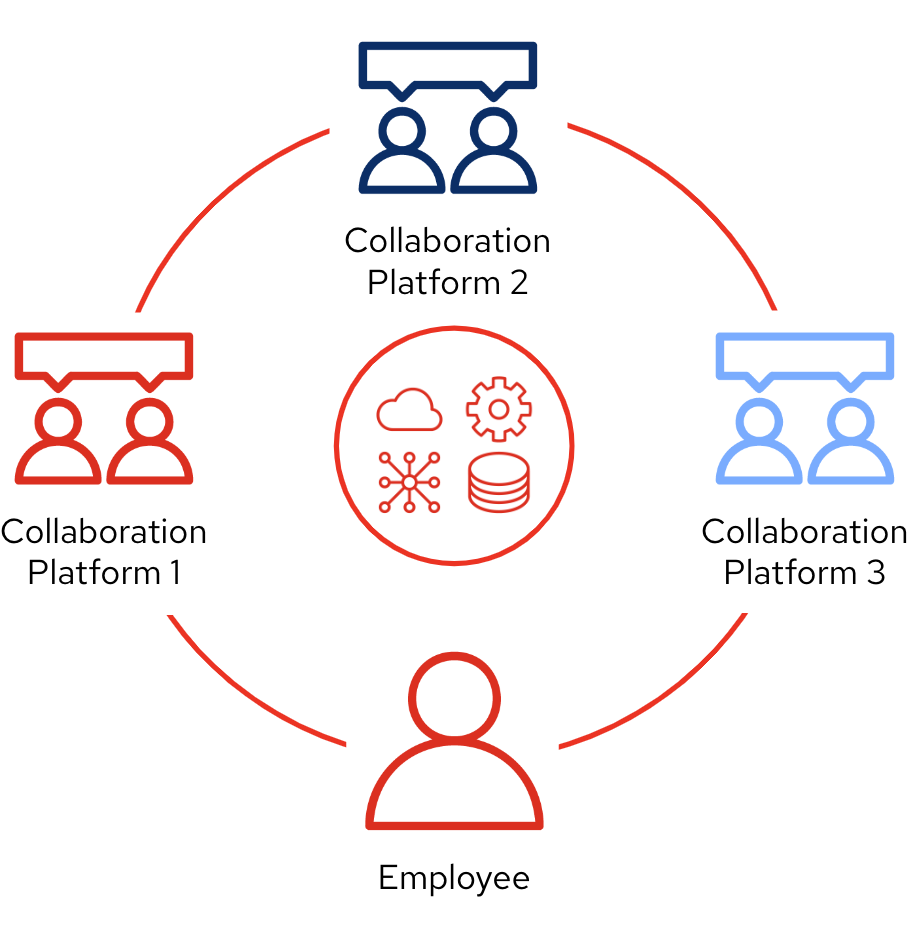
    Figure 2: A unified communication hub allows employees to communicate seamlessly.

    The problem of communication fragmentation is not unique to the use case described above. It’s also found in many relatable use cases, such as sales agents contacting customers and content creators on various social media platforms, to name a couple. The Solution Pattern dives into more detail by choosing a customer support scenario where clients contact support to get assistance or enquire about products. The platform exposes multiple access points for customers to connect, and also integrates multiple communication platforms from where support agents can assist.

    Capabilities on top of Red Hat OpenShift, such as asynchronous messaging with Red Hat AMQ, streams for Apache Kafka, distributed in-memory caching with Red Hat Data Grid, integration flows with Apache Camel, and object storage with Red Hat OpenShift Data Foundation are successfully combined in the ecosystem, ensuring separation of concerns is maintained, and providing healthy solution longevity.

    Video demo

    You can watch the demonstration in the embedded video below:

    More solution patterns and resources

    The solution is well documented in the solution patterns portal. You can find more detailed information about the use case and its architecture, including guided instructions on provisioning and running it yourself.

    You can explore more solution patterns that show how the different Red Hat technologies can be elegantly used together to solve business needs.

    Keep learning by following the resources listed below:

    • Find detailed information about this article’s demo in the solution pattern portal.
    • Don't miss this AI-based solution pattern, previously published in Red Hat Developer.
    • Explore other available solution patterns.
    • Read the Apache Camel page on Red Hat Developer to learn more about the capabilities of Apache Camel.
    • Read about Red Hat AMQ, a lightweight, high-performance, robust messaging platform.
    • Learn how to run Apache Kafka on Kubernetes.
    • Discover Red Hat Data Grid features.

    Related Posts

    • Secure communication with Red Hat Decision Manager

    • Asynchronous communication between microservices using AMQP and Vert.x

    • Improve cross-team collaboration with Camel K

    • Why service mesh and API management are better together

    • How to connect Kubernetes clusters with Service Interconnect

    • Patterns for distributed transactions within a microservices architecture

    Recent Posts

    • Protect data offloaded to GPU-accelerated environments with OpenShift sandboxed containers

    • Case study: Measuring energy efficiency on the x64 platform

    • How to prevent AI inference stack silent failures

    • Preventing GPU waste: A guide to JIT checkpointing with Kubeflow Trainer on OpenShift AI

    • How to manage TLS certificates used by OpenShift GitOps operator

    What’s up next?

    Read Kafka Connect to discover how to build data pipelines between Kafka clusters and a variety of data sources and sinks.

    Get the e-book
    Red Hat Developers logo LinkedIn YouTube Twitter Facebook

    Platforms

    • Red Hat AI
    • Red Hat Enterprise Linux
    • Red Hat OpenShift
    • Red Hat Ansible Automation Platform
    • See all products

    Build

    • Developer Sandbox
    • Developer tools
    • Interactive tutorials
    • API catalog

    Quicklinks

    • Learning resources
    • E-books
    • Cheat sheets
    • Blog
    • Events
    • Newsletter

    Communicate

    • About us
    • Contact sales
    • Find a partner
    • Report a website issue
    • Site status dashboard
    • Report a security problem

    RED HAT DEVELOPER

    Build here. Go anywhere.

    We serve the builders. The problem solvers who create careers with code.

    Join us if you’re a developer, software engineer, web designer, front-end designer, UX designer, computer scientist, architect, tester, product manager, project manager or team lead.

    Sign me up

    Red Hat legal and privacy links

    • About Red Hat
    • Jobs
    • Events
    • Locations
    • Contact Red Hat
    • Red Hat Blog
    • Inclusion at Red Hat
    • Cool Stuff Store
    • Red Hat Summit
    © 2026 Red Hat

    Red Hat legal and privacy links

    • Privacy statement
    • Terms of use
    • All policies and guidelines
    • Digital accessibility

    Chat Support

    Please log in with your Red Hat account to access chat support.
