
Article
Self-service messaging with Red Hat AMQ Online and GitOps
This article explores the service model of Red Hat AMQ Online 1.1 and how it maps to a GitOps workflow for different teams in your organization.
This article explores the service model of Red Hat AMQ Online 1.1 and how it maps to a GitOps workflow for different teams in your organization.

Learn how to create a Flask application running on OpenShift, which will use the Kubernetes Python client to interact with the OpenShift API.

This article discusses core distributed tracing concepts centered around reactive applications using Eclipse Vert.x and Jaeger.

How do you use the Red Hat OpenShift installer with Windows when the installer only runs on Linux or macOS? Don Schenk shows how in this video.

This article shows how to use the Red Hat Enterprise Linux 8 Image Builder tool to build custom images to deploy RHEL on cloud and virtualization platforms.
Check out the interactive sessions coming up at Red Hat summit and learn the latest Kubernetes and Red Hat OpenShift practices.

OpenShift Do (odo, for short) is a fast and straightforward CLI for developers who write, build, and iterate constantly on their source code. Learn more.

Get an introduction to Operators and Operator Lifecycle Management in this illustrated e-book.

Learn how the developer-friendly OpenShift Do (odo) command-line tool can simplify your build and deploy processes in this introduction.

Learn how to build an automated integration and delivery pipeline using Jenkins CI/CD and Red Hat OpenShift 4.0 in this tutorial.

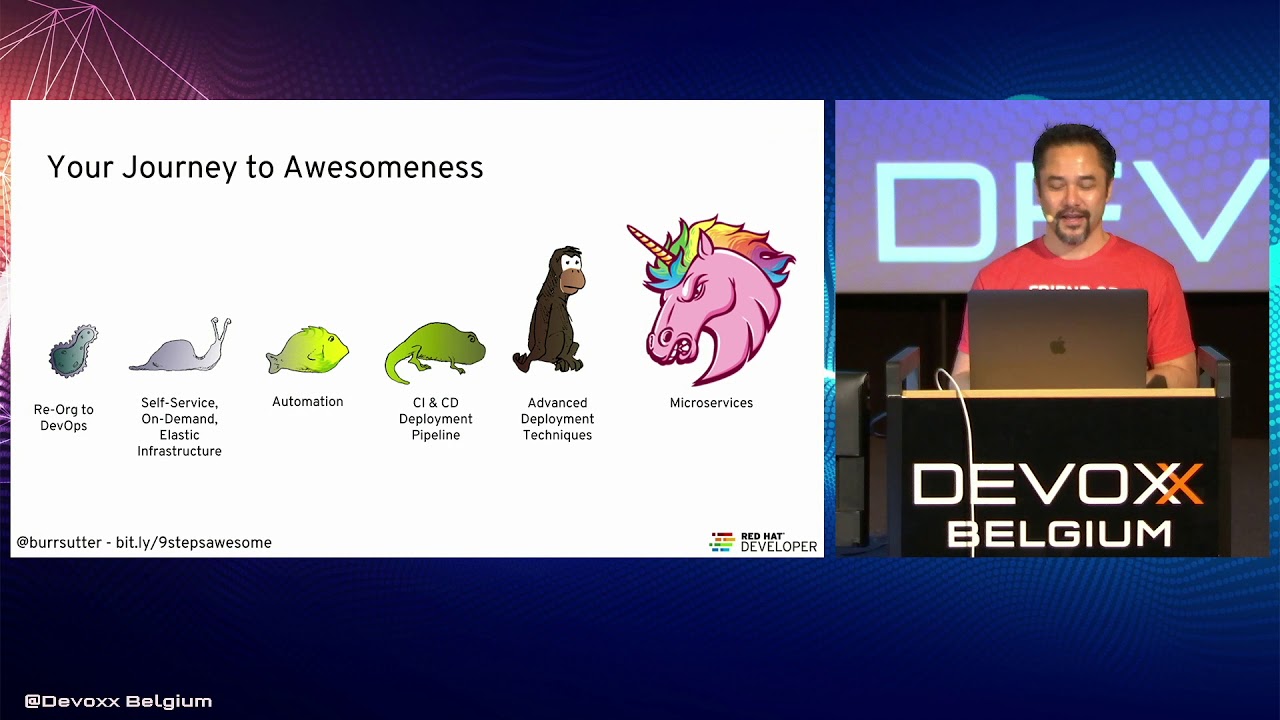
Everybody seems to be rocking with Kubernetes! Even your favorite repos at GitHub are running on top of it. Don't be the last developer/architect to board this bullet train. Come and learn a LOT in this session about Kubernetes - from getting started to staying productive. We will provide numerous practical tips & techniques that will take you from cloud newbie to cloud native.
Serverless computing is one of today's hottest developer topics. Get hands-on experience from Burr Sutter's team at Red Hat Summit's Guru Night.

In this article, we'll show how to use Red Hat Fuse 7 on Spring Boot for new integration platforms on Red Hat OpenShift Container Platform.

Camel K lets you build and deploy your API on Kubernetes or Red Hat OpenShift in less than a second. Learn how in this tutorial.

Learn how easy it is to use Quiver to interact with AMQ Broker and AMQ Interconnect on Red Hat OpenShift Container Platform with this demo.

Learn how to set up and manage your Red Hat OpenShift 4.0 cluster on AWS from a Windows PC, using the Windows Subsystem for Linux.
A DevNation Live session - Kubernetes enterprise integration patterns with Camel-K

This article walks you through a process integration example and provides a blueprint to help with your own integration scenario.

Check out the instructor-led labs in the Emerging Technologies track of Red Hat Summit 2019, coming up May 7-9 in Boston.

To increase your productivity as a Kubernetes app developer, you need to be armed with the right set of tools such as Minikube, Kail, and Kubens.

In this part of our series on Kubernetes, we'll look at how to get multiple containers running in order to put together an entire system.

Build Your "Hello World" Container Using C#.After reading the previous blog post in this series, "Containers, kubernetes, microservices: Start here", you're now ready to build your first "Hello World" application and run it in a container. For this, we'll be using C#.
Build Your "Hello World" Container Using Python.After reading the previous blog post in this series, "Containers, kubernetes, microservices: Start here", you're now ready to build your first "Hello World" application and run it in a container. For this, we'll be using Python.
Build Your "Hello World" Container Using Java

Build here. Go anywhere.
We serve the builders. The problem solvers who create careers with code.
Join us if you’re a developer, software engineer, web designer, front-end designer, UX designer, computer scientist, architect, tester, product manager, project manager or team lead.