Red Hat

Video Thumbnail
Video

How code makes it into Red Hat Enterprise Linux

Red Hat Developer Program

Ever wonder how great features make it from the community into enterprise-ready technology like Red Hat(R) Enterprise Linu(R)? Fedora Project Leader Paul Friends explains how projects started upstream gain in popularity and maturity, are hardened and tested, and eventually make their way to enterprise solutions. Learn more about the Fedora Project: http://fedoraproject.org/

Video Thumbnail
Video

Red Hat Taste of Training: Managing SELinux modes on your system

Red Hat Developer Program

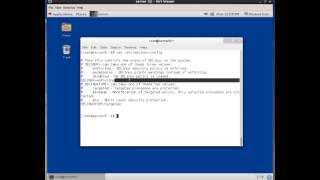
Using content from our Red Hat® System Administration II (RH134) course, this Taste of Red Hat Training video will show you how to manage SELinux modes on your system. In the complete, 4-day course, Red Hat System Administration II focuses on the key tasks needed to become a full time Linux® administrator. It is part II of the core system administration tasks needed for Red Hat Enterprise Linux 7 and is the follow-on to Red Hat System Administration I (RH124). This course goes deeper into enterprise Linux administration including file systems and partitioning, logical volumes, SELinux, firewalling, and troubleshooting. Attending both Red Hat System Administration I and Red Hat System Administration II can help you in your preparation for the Red Hat Certified System Administrator Exam (EX200).

Video Thumbnail
Video

Red Hat OpenShift flex demo

Red Hat Developer Program

Isaac Roth from Red Hat discusses the way developers can use OpenShift flex to self-service deploy applications in minutes, choose and manage operating environments, and share and monitor information and functionality. Watch as Roth demonstrates OpenShift actions, deployments, and measures through the management interface. Learn more about Red Hat OpenShift: http://openshift.redhat.com/app/ Learn more about Red Hat cloud technology: http://www.redhat.com/cloud/build/

Video Thumbnail
Video

IT Professionals worldwide are getting certified on Red Hat OpenStack Platform

Red Hat Developer Program

IT professionals around the world are getting trained and certified by Red Hat on Red Hat Enterprise Linux OpenStack Platform. We met with a few of the Red Hat Certified Professionals to see how they are leveraging the knowledge and skills from the rigorous, hands-on training and exam. An IT professional who has earned the Red Hat Certified System Administrator in Red Hat OpenStack has demonstrated the skills, knowledge, and abilities needed to create, configure, and manage private clouds using Red Hat Enterprise Linux® OpenStack® Platform. To learn more about Red Hat Enterprise Linux OpenStack Platform Training and Certification, visit us at www.redhat.com/training/paths/openstack

Video Thumbnail
Video

Red Hat OpenShift Enterprise Use Case Animation

Red Hat Developer Program

Public Platform-as-a-Service (PaaS) solutions lack the privacy and compliance features needed by enterprises. Learn how OpenShift Enterprise by Red Hat, Red Hat CloudForms, and Red Hat Enterprise Virtulization provide an enterprise PaaS solution and a strategic choice for an open, hybrid cloud. Learn more about OpenShift Enterprise: https://www.openshift.com/products/enterprise

Video Thumbnail
Video

MongoDB and modern agile development

Red Hat Developer Program

Dwight Merriman, CEO and co-founder of 10gen, discusses the continuing growth of platform-as-a-service (PaaS) and cloud technologies that led to the creation of MongoDB. MongoDB is an open source SQL database (non-relational)--a resource that scales horizontally on clusters of commodity hardware. MongoDB makes writing software apps easier and faster through cloud computing and resultant changes in database technologies. MongoDB is a better fit for open source (iterative) software development. It lends scalability and agility to the development process. OpenShift and PaaS give developers a full stack that can be used to develop and deploy apps without hardware or IT overhead. 10gen's MongoDB is a layer in that stack. This short video supports a talk that Red Hat CTO Brian Stevens gave at the 2012 Red Hat Summit. You can view this talk in full: http://www.youtube.com/watch?v=DDdiS6pvYJg&list=PL995CD1141C3330D5&index=17&feature=plpp_video Watch more 2012 Red Hat Summit videos: http://www.youtube.com/playlist?list=PL995CD1141C3330D5

Video Thumbnail
Video

JBoss EAP 7 Management Console Overview

Red Hat Developer Program

A quick tour of what's new with the JBoss EAP 7 Management Console. New features, how to's, and a recap of advanced operations.

Video Thumbnail
Video

Appcelerator relies on Red Hat

Red Hat Developer Program

A private company with approximately 140 employees, Appcelerator worked closely with Red Hat on their flagship platform, Titanium. One of the leading enterprise-grade, cross-platform development solutions on the market, Titanium counts more than 300,000 mobile developers in its worldwide ecosystem. Appcelerator integrated Red Hat's OpenShift PaaS into its Titanium platform, enabling developers to push and auto-scale the backend of their mobile development processes. This integration gives Titanium developers the ability to create, deploy, and manage their mobile applications, and then push these applications to Red Hat's OpenShift PaaS with just a single click.

Video Thumbnail
Video

The OpenShift Ecosystem: Red Hat Customer Success Stories

Red Hat Developer Program

Hear directly from Red Hat(R) OpenShift customers and users--CEOs from BitRock, eXo, and Contendo, the EVP of products and technologies at 10gen, the director of Mayflower GmBH, and an information manager at FARO, as well as the CTO and co-founder of Appcelerator. They've all chosen Red Hat OpenShift to simply, easily, and affordably develop, deploy, and manage their enterprise PaaS architecture. The flexibility and open APIs of the Red Hat stack make moving into the cloud simple and sustainable--no matter your line of business or level of expertise. Learn more about Red Hat OpenShift: http://openshift.redhat.com/app/ Learn more about Red Hat cloud technology: http://www.redhat.com/cloud/build/

Video Thumbnail
Video

Using JBoss EAP 7 with Red Hat OpenShift Container Platform

Red Hat Developer Program

A quick intro on how to develop and deploy JBoss EAP 7 apps to OpenShift, Red Hat's hybrid cloud PaaS. Topics covered: - Building EAP 7 apps using OpenShift S2I images - Deploying and auto-scaling apps - Accessing OpenShift through JBoss Developer Studio - Brief description of advanced operations with EAP 7 and OpenShift

Video Thumbnail
Video

Offline CLI with JBoss EAP 7 Video

Red Hat Developer Program

Understanding and getting started with EAP 7's new Management CLI option for offline management of your JBoss EAP server.

Video Thumbnail
Video

Deploy Docker images on OpenShift 3 with Red Hat Developer Studio

Red Hat Developer Program

Learn how to deploy Docker images on OpenShift 3, running in Red Hat's Container Development Kit, with Red Hat Developer Studio 10 The Microservices Architecture tutorial is available at https://htmlpreview.github.io/?https://github.com/redhat-helloworld-msa/helloworld-msa/blob/master/readme.html Learn more about Red Hat Developer Studio, Docker and OpenShift 3 support in Eclipse from http://tools.jboss.org/

Video Thumbnail
Video

Quick Tour #1: JBoss BRMS Easy Install Project

Red Hat Developer Program

The first step in understanding JBoss BRMS is provided in the JBoss BRMS Starter Kit. A crucial piece of the puzzle is the very easy install project that gets you up and running quickly. This video shows where to find this project, how to obtain it and how to set it up.

Video Thumbnail
Video

JUDCon 2012 - The Future of the Enterprise Service Bus at JBoss

Red Hat Developer Program

A JUDCon 2012 session presented by Tom Cunningham and Keith Babo In this session, Tom and Keith will cover the state of the ESB at JBoss as represented in two community projects - JBoss ESB and SwitchYard. While JBoss ESB is the current foundation of JBoss SOA Platform, the next major version of the platform will use SwitchYard at its core. So what are the differences between these two projects, why are we making this change, and how will it impact JBoss users and developers? This session covers all that and more: • Past, present and future of JBoss ESB and SwitchYard • Similarities and differences between the projects • Detailed walkthrough of migration strategies for existing ESB applications • Practical tips for service development on both platforms If you're interested in ESBs in general or the JBoss-flavored ones in particular, come join the project leads for JBoss ESB and SwitchYard for this informative session. There will be straight talk, expert advice, loads of examples, interactive discussion, and dancing bears.

Video Thumbnail
Video

2012 Red Hat Summit: Part 1, Red Hat Enterprise Linux Roadmap

Red Hat Developer Program

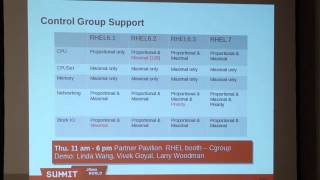
In this 'Best of' session at the 2012 Red Hat Summit and JBoss World, Tim Burke, vice president of Linux Engineering at Red Hat, describes feature enhancements in recently released versions of Red Hat Enterprise Linux. Burke then has his team of engineering development managers highlight their technology area and key initiatives. They also discuss emerging technologies targeted for delivery in future releases. Burke first gives a brief Red Hat Enterprise Linux life cycle overview, and an explanation of various themes within Linux development today. He then explores timeframes and Red Hat Enterprise Linux 7 feature possibilities and Fedora 18 enhancements. He then turns the session over to his teams, who present technology area highlights, including information about: - virtualization - kernel and virtual memory - hardware enablement - storage and volume management - filesystem and Gluster Watch Part 2 of this session video: http://www.youtube.com/watch?v=H-cDorXHO5U&list=PL995CD1141C3330D5&index=17&feature=plpp_video Watch more 2012 Red Hat Summit and JBoss World videos: http://www.youtube.com/playlist?list=PL995CD1141C3330D5&feature=plcp

Video Thumbnail
Video

NYSE Euronext Depends on JBoss: A Red Hat Customer Success Story

Red Hat Developer Program

"We've been running mission-critical applications on Red Hat Enterprise Linux for a long time. It was that experience and those results that led us to consider JBoss Enterprise Middleware, and we're satisfied--and not surprised--knowing that Red Hat's middleware solutions are as enterprise-class as its platform solutions." - Brian Clark, chief software architect, NYSE Euronext Find out more at: http://customers.redhat.com/2010/06/19/nyse-euronext-standardizes-on-jboss/?intcmp=70160000000IgpeAAC

Video Thumbnail
Video

JUDCon 2012 - OpenShift State of the Union

Red Hat Developer Program

A JUDCon 2012 session presented by Eric D. Schabell It has been a marriage made in heaven. JBoss has brought the enterprise application platform and JEE to the OpenShift PaaS for all of your development tasks. It is much more than a simple application server though, JBoss provides a multitude of projects that cover everything from mobile, business process management, web development, support tooling to inter connectivity with other development languages like Ruby. This session will take you through an overview of what OpenShift has to offer right now, how to get started, and then provide some highlights of the various projects that you can now access within the JBoss community. Bring you laptop and follow along as we help you get started in mobile development with Aerogears, Ruby Java connectivity with TorqueBox, process development with tooling from jBPM and much more. These will all be real world projects put on display for you with code you can access live during this session!

Video Thumbnail
Video

Heidelberg becomes Interactive Using Red Hat and JBoss: A Red Hat Customer Success Story

Red Hat Developer Program

Heidelberg's Global IT Director Mathias Berg explains how, with the help of Red Hat(R) Consulting, Heidelberg built an interactive customer portal using JBoss(R) Enterprise Portal Platform and migrated its proprietary application platform to JBoss Enterprise Application Platform. Find more Red Hat and JBoss customer success stories: http://www.redhat.com/customersuccess/

Video Thumbnail
Video

Simplify with JBoss Enterprise SOA

Red Hat Developer Program

Is your SOA solution simple to develop, deploy, and manage? JBoss Enterprise SOA Platform is, and here are a few of the reasons why. Want more information about JBoss SOA? http://www.jboss.com/resources/soa/ http://www.jboss.com/products/platforms/soa/

Video Thumbnail
Video

Open - JBoss Enterprise SOA Platform 5

Red Hat Developer Program

With JBoss, your SOA solution comes from a large, open developer community. When your needs change, we listen. It's SOA built for your needs. Not ours. And that means you're in control. Find out more about JBoss SOA: http://www.jboss.com/resources/soa/ http://www.jboss.com/products/platforms/soa/

Video Thumbnail
Video

2012 JBoss World: Craig Muzilla, Mark Little middleware keynote

Red Hat Developer Program

In this keynote talk from JBoss World 2012, Craig Muzilla, vice president and general manager of the Middleware Business Unit, and Dr. Mark Little, senior director of Middleware Engineering, both from Red Hat, demonstrate how JBoss Enterprise Middleware transcended its beginnings as a rock-solid application infrastructure to become a strategic asset for enterprises to significantly improve their businesses. They also discuss how Red Hat is attacking the challenges customers are facing today as they consider their next-generation enterprise architectures. Fast, easy-to-use, high-value application infrastructure is critical to enterprise success. But it's not enough. Today, IT is expected to not only cut costs, but also drive top-line revenue by optimizing business process flow, extending beyond the traditional datacenter to incorporate mobile devices into enterprise solutions and efficiently exploit terabytes of data. The way we develop and integrate applications, design enterprise architectures, and leverage new technologies, including NoSQL, elastic data caching, and even industry standards such as Java, must evolve to deliver on the promise of cloud an mobile. Little and Muzilla show how Red Hat is at the heart of it all, driving the technologies, standards, and software platforms that enable customers to prosper. Watch more 2012 Red Hat Summit and JBoss World videos: http://www.youtube.com/playlist?list=PL995CD1141C3330D5&feature=plcp

Video Thumbnail
Video

2012 Red Hat Summit: An Overview of Red Hat Cloud & Systems Management Portfolio

Red Hat Developer Program

This video provids an overview of Red Hat cloud and systems management portfolio, presented by Chris Wells, Joe Fernandes, and Katie Kelley. Red Hat became far more than just the premier open source Linux solution provider long ago. It now provides a suite of products and solutions that offer robust and expansive capabilities to manage operating systems, hypervisors, middleware, and applications on physical, virtual, and cloud resources. This Transform session focuses on Red Hat Network Proxy, Red Hat Network Satellite, JBoss Operations Network, and Red Hat CloudForms. The presenters also touch on Red Hat Enterprise Virtualization Manager, Red Hat OpenShift, and other topics. This session helps you navigate these offerings and guides further discussion about how we can help you address your IT challenges. Watch more 2012 Red Hat Summit and JBoss World videos: http://www.youtube.com/playlist?list=PL995CD1141C3330D5&feature=plcp
Video Thumbnail
Video

JUDCon 2012 - Modular Java EE in the Cloud

Red Hat Developer Program

A JUDCon 2012 session presented by Paul Bakker Designing a system that can evolve without creating a maintenance nightmare is far from trivial and there are no silver bullets to do this correctly. A service oriented, modular architecture will help a lot to achieve this goal. Modularity forces separation of concerns which, when combined with a service oriented architecture, enables you to replace parts of a system without breaking others. The only mature modularity approach for Java is OSGi. OSGi is a framework that enables low-level modularity and services, but it is not an application framework like Java EE, i.e. you still need APIs to create web applications, use transactions, access data sources etc. Without these APIs you will have a hard time to actually build applications. Unfortunately OSGi and Java EE did not interoperate well in the past; it was very challenging to mix both. But what if we want modularity in our architecture, but also the ease-of-use of Java EE 6? Luckily times are changing. All major application servers are getting support for deploying mixed Java EE and OSGi applications. This makes it possible to deploy OSGi bundles that contain Java EE 6 code such as EJBs, JPA and JAX-RS resources. CDI can be used to inject OSGi services and EJBs can easily be exported as OSGi services too. The next question is how to deploy this into the cloud. Just uploading a large WAR file to a server in the cloud doesn't fit modularity very well. How can you update just parts of a running application without breaking the rest of it? We will introduce Apache ACE, an Open Source Provisioning Platform to deploy OSGi bundles (containing Java EE code) and other artifacts to the cloud.

Video Thumbnail
Video

JUDCon 2012 - Mobilize your application using JBoss

Red Hat Developer Program

A JUDCon 2012 session presented by Matt Hicks. Join us for a technical how-to session on how to develop iPhone and Android apps with MongoDB backends for the cloud. Let's skip having to learn three different languages and jumpstart the development process using what you already know. We'll utilize Titanium to create a native mobile application targeting multiple mobile platforms. Next, we'll deploy our backend app to the cloud using JBoss AS and hook it up to our mobile app via a REST API. Finally we'll pull out our smartphones and bask in the awesomeness of our apps! Nothing complicated, nothing convoluted. Just straight ahead mobile development goodness with JBoss and MongoDB.