Java

Video Thumbnail
Video

CDI 2.0 is coming by Antoine Sabot-Durand/José Paumard

Red Hat Developer Program

The work on JSR 365 (Context and Dependency Injection for Java) started one year ago. Expert group already added interesting features like asynchronous events or Java SE bootstrap. Thanks to early draft and alpha version of CDI 2.0 implementation we can already experiment the future CDI 2.0. In this talk we will show the top new features in CDI 2.0 thru code examples (when possible) and presents expert group serious leads for the end of this first totally open source Java EE specification.

Video Thumbnail
Video

Process-driven applications: let BPM do (some of) your work by Kris Verlaenen

Red Hat Developer Program

Even the simplest application ideas always end up requiring more development than you hoped for: maintaining long-lived state, interaction with other services or human actors performing some of the work, showing current status of ongoing requests, management and reporting, etc. Business processes and rules allow you to externalize some of that logic and dynamically update it, but you don't want your business process management (BPM) system to get in your way either. And every application is different, so you want to be able to fully control every bit of it. Using process-driven application development, you define your application logic in a (flexible) business process, but you also expect your BPM system to help you out with much more than that. In this session we will show you live how to quickly get new web applications up and running by relying on jBPM to provide some of the UI (should you want to), or even to generate parts of your application for you (that you can customize later), so you can focus on what makes your application different. jBPM uses the power of open source and it's flexible architecture to let you decide what you need: nothing more, nothing less.

Video Thumbnail
Video

Docker Tooling for JavaEE Developers by Xavier Coulon

Red Hat Developer Program

Docker is awesome, but how to use it well when doing Java development ? In this talk you will get a quick introduction on how to use Docker effectively, especially for Java EE development. We will show how the recent release of Eclipse Mars supports Docker to make it even more integrated into your day-to-day work from within your IDE. In particular, you'll see how you can pull and run an image for a database, build a custom image for an application server, run it and deploy a JavaEE application using data volume, exposed ports and container links. And more !

Video Thumbnail
Video

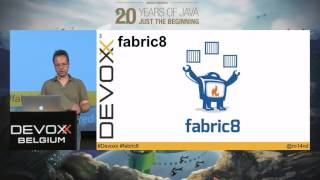
fabric8 - Java developer tools for Kubernetes and OpenShift by Roland Huß

Red Hat Developer Program

Fabric8 is an integration and management platform adding to the Java developer's perspective of Kubernetes and OpenShift. It consists of multiple parts. Fabric8 tooling helps tremendously in deploying Java applications on Kubernetes and OpenShift by creating all the complex deployment descriptors directly from a Java build. In addition, fabric8 contains a rich set of DevOps Microservices which provides a flexible and automatedsetup for a Continous Integration and Delivery pipeline on a per project basis. It also includes an integration-Platform-as-a-Service (iPaaS) centered around Camel and ActiveMQ with rich visualisations and one click installations. But the queen of fabric8 is its web console which allows for a rich user experience for managing Kubernetes services, pods and more. With this in place even complex setups can be easily managed. This talk provides an overview over all these components and shows how the pieces fit together.

Video Thumbnail
Video

JBoss@JavaOne 2014: Java and Mongo for a fun mapping experience - Steve Citron-Pousty

Red Hat Developer Program

You have a great idea for quick and interesting mapping application with pins on a map with some basic search. Then you lose interest because of all the pieces to install. NOT ANYMORE! In this workshop we are going to use 1 command to spin up all our infrastructure (EAP and MongoDB). Then write some quick and easy Java EE code to build a REST service on MongoDB. To wrap it up we will use a simple Leaflet application to display the results. You will witness the transformation from idea to cool pinny map in this quick session.

Video Thumbnail
Video

JBoss@JavaOne 2014: The Path to CDI 2.0 - Antoine Sabot-Durand

Red Hat Developer Program

CDI has proven itself to be a great asset for Java. The many features it provides (dependency injection, contextual lifecycle, configuration, interception, event notification, and more) and the innovative way it provides them (through the use of meta-annotations) explain its rapid adoption. This session reviews the features introduced in CDI 1.1 and 1.2 and discusses improvements planned for CDI 2.0.

Video Thumbnail
Video

JBoss@JavaOne 2014: Developing Modern Mobile Applications - Sebastien Blanc

Red Hat Developer Program

Are you a Java developer and want to develop a mobile app that connects to a secured Java EE back end, but you don’t know where to start? This session is tailored for you. This live coding session, driven by Java and using a familiar development environment, goes step by step through building a complete mobile, hybrid, multiplatform application ready to be distributed on different vendors’ stores, such as the Apple store or Google Play. Starting from scratch, the tutorial takes you through building a simple Java EE application and, from there, scaffolding a mobile web client and turning it into a native app, including Android and iOS. This is an in-depth session in which the attendees will learn concretely, and without using hipster tools, how to enter the mobile world.

Video Thumbnail
Video

Developer Interview (#DI18) - Rafael Benevides about Docker for Java EE Developers

Red Hat Developer Program

(Part 1)Containers are enabling developers to package their applications in new ways that are portable and work consistently everywhere: on your machine, in production, in your data center, and in the cloud. And Docker has become the de facto standard for those portable containers in the cloud. This lab offers developers an intro-level hands-on session with Docker, from installation to exploring Docker Hub, to crafting their own images, to adding Java apps and running custom containers. This is a BYOL (bring your own laptop) session, so bring your Windows, OS X, or Linux laptop and be ready to dig into a tool that promises to be at the forefront of our industry for some time to come.

Video Thumbnail
Video

Thomas Qvarnstrom (@tqvarnst) Continuous Delivery with Docker Containers and Java EE

Red Hat Developer Program

Technical backgrounds to a recent webinar. Learn how to achieve continuous delivery with docker and Java EE. Topics will include: A developer's introduction to docker. Best practices and recipes for docker and Java EE. How to setup a delivery pipeline for a Java EE application running on Red Hat® JBoss® Enterprise Application Platform using docker (live demo). http://www.redhat.com/en/about/events/continuous-delivery-docker-containers-and-java-ee

Video Thumbnail
Video

JavaOne 2015 - Jason Porter - Standardized Extension-Building in Java EE with CDI and JCA

Red Hat Developer Program

In 2003 the Java EE ecosystem received a gift with extensions: JCA 1.5 support in J2EE 1.4. However, it wasn’t until Java EE 5, in 2006, that extensions were really talked about. In Java EE 5, we received Contexts and Dependency Injection (CDI). Along with the namesake of the specification, extensions were introduced. Together we have the ability to extend the platform to do whatever we need. The possibilities of these extensions are limited only by your imagination. You’ve heard about CDI and the extensibility of Java EE 6 and seen enough to pique your curiosity. This session will sate that curiosity and give you enough information to build great extensions for your application and business.

Video Thumbnail
Video

JavaOne 2015 - Aslak Knutsen - Taming Microservices Testing with Arquillian

Red Hat Developer Program

The Borg is docking your system; testing is futile! Or is it? With microservices, polyglot, and DevOps on the rise, where are we at with testing? Do these technologies bring more complexity and make our testing effort harder, or maybe the contrary? Do they actually help us write better tests more easily? This session explores not only how we can do our testing in this new world but also how the new world can help us test better. It takes a close look at various topics, from NodeJS-, DynJS-, VertX-, Ceylon-, or Ruby-orchestrated microservices through system-scale testing with various configurations to database migration and regression testing. All are within reach.

Video Thumbnail
Video

JavaOne 2015 - Rafael Benevides & Markus Eisele - Docker for Java EE Developers

Red Hat Developer Program

Containers are enabling developers to package their applications in new ways that are portable and work consistently everywhere: on your machine, in production, in your data center, and in the cloud. And Docker has become the de facto standard for those portable containers in the cloud. This lab offers developers an intro-level hands-on session with Docker, from installation to exploring Docker Hub, to crafting their own images, to adding Java apps and running custom containers. This is a BYOL (bring your own laptop) session, so bring your Windows, OS X, or Linux laptop and be ready to dig into a tool that promises to be at the forefront of our industry for some time to come.