Redhat Developers  Logo
  • AI

    Get started with AI

    • Red Hat AI
      Accelerate the development and deployment of enterprise AI solutions.
    • AI learning hub
      Explore learning materials and tools, organized by task.
    • AI interactive demos
      Click through scenarios with Red Hat AI, including training LLMs and more.
    • AI/ML learning paths
      Expand your OpenShift AI knowledge using these learning resources.
    • AI quickstarts
      Focused AI use cases designed for fast deployment on Red Hat AI platforms.
    • No-cost AI training
      Foundational Red Hat AI training.

    Featured resources

    • OpenShift AI learning
    • Open source AI for developers
    • AI product application development
    • Open source-powered AI/ML for hybrid cloud
    • AI and Node.js cheat sheet

    Red Hat AI Factory with NVIDIA

    • Red Hat AI Factory with NVIDIA is a co-engineered, enterprise-grade AI solution for building, deploying, and managing AI at scale across hybrid cloud environments.
    • Explore the solution
  • Learn

    Self-guided

    • Documentation
      Find answers, get step-by-step guidance, and learn how to use Red Hat products.
    • Learning paths
      Explore curated walkthroughs for common development tasks.
    • Guided learning
      Receive custom learning paths powered by our AI assistant.
    • See all learning

    Hands-on

    • Developer Sandbox
      Spin up Red Hat's products and technologies without setup or configuration.
    • Interactive labs
      Learn by doing in these hands-on, browser-based experiences.
    • Interactive demos
      Click through product features in these guided tours.

    Browse by topic

    • AI/ML
    • Automation
    • Java
    • Kubernetes
    • Linux
    • See all topics

    Training & certifications

    • Courses and exams
    • Certifications
    • Skills assessments
    • Red Hat Academy
    • Learning subscription
    • Explore training
  • Build

    Get started

    • Red Hat build of Podman Desktop
      A downloadable, local development hub to experiment with our products and builds.
    • Developer Sandbox
      Spin up Red Hat's products and technologies without setup or configuration.

    Download products

    • Access product downloads to start building and testing right away.
    • Red Hat Enterprise Linux
    • Red Hat AI
    • Red Hat OpenShift
    • Red Hat Ansible Automation Platform
    • See all products

    Featured

    • Red Hat build of OpenJDK
    • Red Hat JBoss Enterprise Application Platform
    • Red Hat OpenShift Dev Spaces
    • Red Hat Developer Toolset

    References

    • E-books
    • Documentation
    • Cheat sheets
    • Architecture center
  • Community

    Get involved

    • Events
    • Live AI events
    • Red Hat Summit
    • Red Hat Accelerators
    • Community discussions

    Follow along

    • Articles & blogs
    • Developer newsletter
    • Videos
    • Github

    Get help

    • Customer service
    • Customer support
    • Regional contacts
    • Find a partner

    Join the Red Hat Developer program

    • Download Red Hat products and project builds, access support documentation, learning content, and more.
    • Explore the benefits

New developer tools in Red Hat OpenShift 4.2

October 16, 2019
David Millsaps
Related topics:
Developer toolsKubernetes
Related products:
Developer ToolsetRed Hat OpenShift LocalRed Hat OpenShift

    Today’s announcement of Red Hat OpenShift 4.2 represents a major release for developers working with OpenShift and Kubernetes.  There is a new application development-focused user interface, new tools, and plugins for container builds, CI/CD pipelines, and serverless architecture.
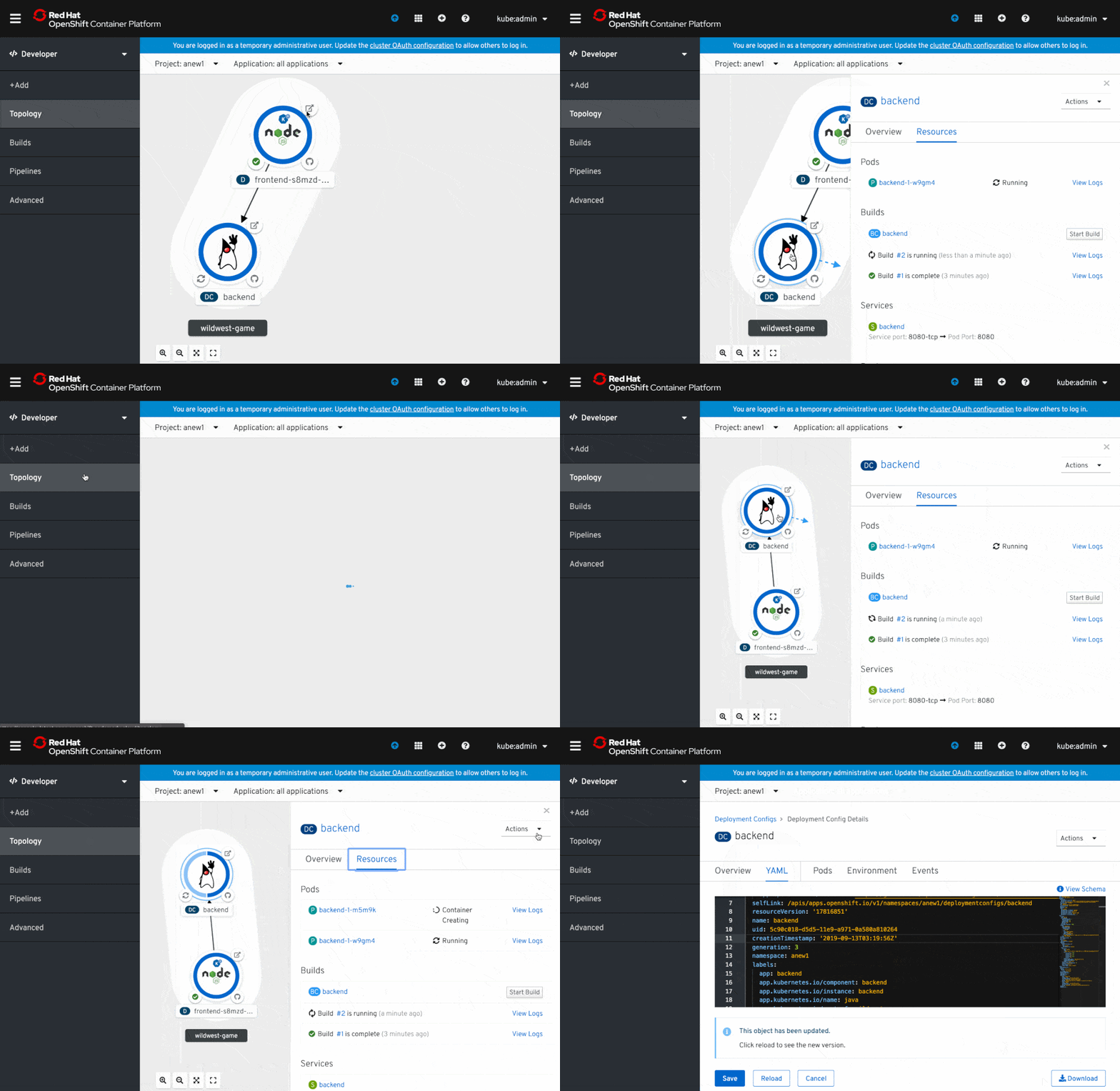
    application topology view in openshift
    Application topology view in developer perspective.

    New features include:

    • A new developer perspective so you can focus on the application. This view is focused on information and configuration developers need to know. There is an enhanced UI for application topology and application builds makes it easier for developers to build, deploy and visualize containerized applications and cluster resources.
      See an in-depth review.
    • odo, a developer-focused command-line interface that simplifies application development on OpenShift. Using a “git push” style interaction, this CLI helps developers develop applications with on OpenShift without needing to understand the details of Kubernetes operations.
      Get started with Odo.
    • Red Hat OpenShift Connector for Microsoft Visual Studio Code, JetBrains IDE (including IntelliJ) and Eclipse Desktop IDE, making it easier to plug into existing developer pipelines. You can develop, build, debug, and deploy applications on OpenShift without leaving your favorite IDE.
      Get the Red Hat OpenShift Connector for your IDE.
    • Red Hat OpenShift Deployment Extension for Microsoft Azure DevOps. Users of this DevOps toolchain can deploy their applications to Azure Red Hat OpenShift or any other OpenShift cluster directly from Microsoft Azure DevOps.
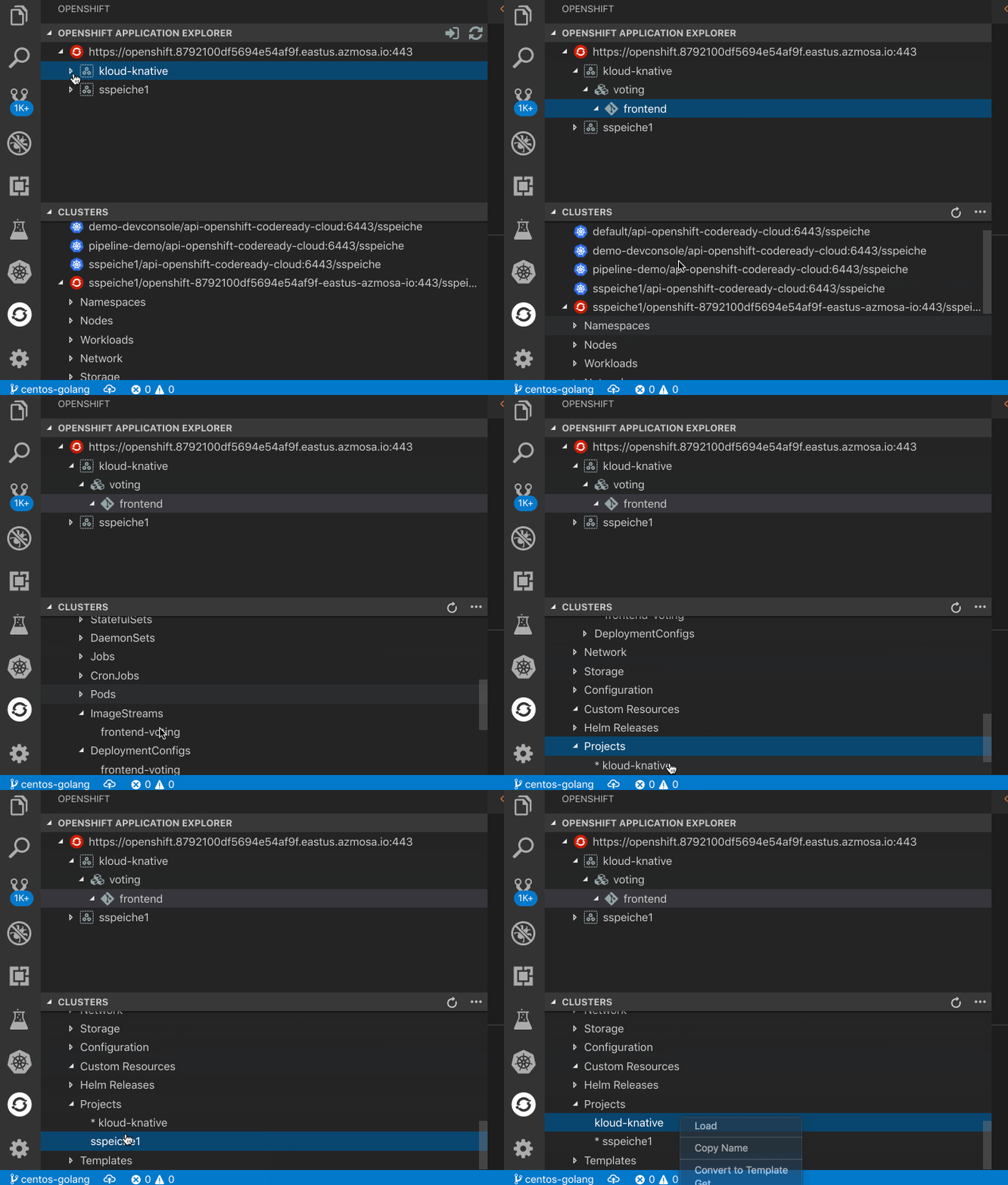
    VS Code Plugin for OpenShift

    Red Hat OpenShift connector plugin view in Visual Studio Code.

    Red Hat CodeReady Containers is an easy way to try or develop with Red Hat OpenShift on your local machine. A preconfigured OpenShift cluster is tailored for a laptop or desktop development making it easier to get going quickly with a personal cluster. It’s the easiest way to get a cluster for following our OpenShift tutorials.

    See overview videos for installing and using CodeReady Containers on your OS.

    Service Mesh

    OpenShift Service Mesh is based on Istio along with the Kiali and Jaeger projects and delivered via Operator. OpenShift Service Mesh provides traffic monitoring, access control, discovery, security, resiliency, tracing, and reporting to a group of services by running as container sidecars. You get those features without any custom code; no changes are required to the code of any of your services.

    Preview: OpenShift Serverless and OpenShift Pipelines

    Serverless: OpenShift Serverless lets you deploy applications that can scale to zero. Based on the Knative project, OpenShift Serverless gives you the Knative toolset but is easily installed via an Operator. OpenShift Serverless is available as an Operator on every OpenShift 4 cluster.  OpenShift Serverless ties into the developer-perspective available in OpenShift, with options for common workflows, such as Import from Git or Deploy an Image, allowing users to create serverless applications directly from the console.

    Continuous integration and continuous delivery based on Tekton: In OpenShift, you have an alternative to Jenkins for CI/CD, called OpenShift Pipelines. Pipelines is based on the Tekton project and uses Operators as components in your automation. OpenShift Pipelines adopts the GitOps mindset with support for configuring the entire pipeline-as-code.  Each step is executed in its own container, so resources are only used when the step is running. This eliminates the need for a CI/CD server and gives control of the pipeline to the developer team. OpenShift Pipelines is available as an Operator in the OpenShift Operator Hub.

    Learn about how to use these new tools and application development with OpenShift at developers.redhat.com/openshift.

    Last updated: November 8, 2023

    Recent Posts

    • Preventing GPU waste: A guide to JIT checkpointing with Kubeflow Trainer on OpenShift AI

    • How to manage TLS certificates used by OpenShift GitOps operator

    • Configure a split disk on OpenShift Container Platform

    • Red Hat Enterprise Linux 10.2 and 9.8: Top features for developers

    • What GPU kernels mean for your distributed inference

    Red Hat Developers logo LinkedIn YouTube Twitter Facebook

    Platforms

    • Red Hat AI
    • Red Hat Enterprise Linux
    • Red Hat OpenShift
    • Red Hat Ansible Automation Platform
    • See all products

    Build

    • Developer Sandbox
    • Developer tools
    • Interactive tutorials
    • API catalog

    Quicklinks

    • Learning resources
    • E-books
    • Cheat sheets
    • Blog
    • Events
    • Newsletter

    Communicate

    • About us
    • Contact sales
    • Find a partner
    • Report a website issue
    • Site status dashboard
    • Report a security problem

    RED HAT DEVELOPER

    Build here. Go anywhere.

    We serve the builders. The problem solvers who create careers with code.

    Join us if you’re a developer, software engineer, web designer, front-end designer, UX designer, computer scientist, architect, tester, product manager, project manager or team lead.

    Sign me up

    Red Hat legal and privacy links

    • About Red Hat
    • Jobs
    • Events
    • Locations
    • Contact Red Hat
    • Red Hat Blog
    • Inclusion at Red Hat
    • Cool Stuff Store
    • Red Hat Summit
    © 2026 Red Hat

    Red Hat legal and privacy links

    • Privacy statement
    • Terms of use
    • All policies and guidelines
    • Digital accessibility

    Chat Support

    Please log in with your Red Hat account to access chat support.