AI
  • Get started with AI

    • Red Hat AI

      Accelerate the development and deployment of enterprise AI solutions.

    • AI learning hub

      Explore learning materials and tools, organized by task.

    • AI interactive demos

      Click through scenarios with Red Hat AI, including training LLMs and more.

    • AI/ML learning paths

      Expand your Red Hat OpenShift AI knowledge using these learning resources.

    • AI quickstarts

      Focused AI use cases designed for fast deployment on Red Hat AI platforms.

    • No-cost AI training

      Foundational Red Hat AI training.

  • Featured resources

    • Red Hat OpenShift AI
    • Open source AI for developers
    • AI product application development
    • Open source-powered AI/ML for hybrid cloud
    • AI and Node.js cheat sheet

Red Hat AI Factory with NVIDIA

Red Hat AI Factory with NVIDIA is a co-engineered, enterprise-grade AI solution for building, deploying, and managing AI at scale across hybrid cloud environments.

Learn
  • Self-guided

    • Documentation

      Find answers, get step-by-step guidance, and learn how to use Red Hat products.

    • Learning paths

      Explore curated walkthroughs for common development tasks.

    • Guided learning

      Receive custom learning paths powered by our AI assistant.

    • See all learning
  • Hands-on

    • Developer Sandbox

      Spin up Red Hat's products and technologies without setup or configuration.

    • Interactive labs

      Learn by doing in these hands-on, browser-based experiences.

    • Interactive demos

      Click through product features in these guided tours.

  • Browse by topic

    • AI/ML
    • Automation
    • Java
    • Kubernetes
    • Linux
    • See all topics
  • Training & certifications

    • Courses and exams
    • Certifications
    • Skills assessments
    • Red Hat Academy
    • Learning subscription
    • Explore training
Build
  • Get started

    • Red Hat build of Podman Desktop

      A downloadable, local development hub to experiment with our products and builds.

    • Developer Sandbox

      Spin up Red Hat's products and technologies without setup or configuration.

  • Download products

    • Red Hat Enterprise Linux
    • Red Hat AI
    • Red Hat OpenShift
    • Red Hat Ansible Automation Platform
    • See all products
  • Featured

    • Red Hat build of OpenJDK
    • Red Hat JBoss Enterprise Application Platform
    • Red Hat OpenShift Dev Spaces
    • Red Hat Developer Toolset
  • References

    • E-books
    • Documentation
    • Cheat sheets
    • Architecture center
Community
  • Get involved

    • Events
    • Live AI events
    • Red Hat Summit
    • Red Hat Accelerators
    • Community discussions
  • Follow along

    • Articles & blogs
    • Developer newsletter
    • Videos
    • Github
  • Get help

    • Customer service
    • Customer support
    • Regional contacts
    • Find a partner

Join the Red Hat Developer program

Download Red Hat products and project builds, access support documentation, learning content, and more.

ConsoleDocsSupport Search
New For you

Resources to explore

Check out popular resources, tools, and information from Red Hat. We'll recommend more as you browse.

  • Product downloads
  • Cheat sheets
  • Red Hat Developer learning portal
  • Developer blog
  • E-books
  • Developer Sandbox
Log in

Get more with a Red Hat Developer account

  • Product downloads
  • Console access
  • Event registration
  • Training & trials
Explore more account benefitsLog in or register

A subscription may be required for some services.

Contact us

Red Hat Fuse 7 Is Now Available

June 4, 2018
Christina Lin
Related topics:
Java microservicesMicroservices
Related products:
Red Hat Fuse

    Red Hat Fuse 7 (formerly called Red Hat JBoss Fuse) is now officially available. This cloud-native, distributed solution allows developers to easily develop, deploy and scale integration applications. Architects can compose and orchestrate microservices with Red Hat Fuse to introduce agility to the systems. In this release, Fuse also empowers integration experts and business users to become more productive with the self-service low-code platform. With this new agile integration solution, enterprises can now engage in wider collaboration with and among partners at a much quicker pace.

    Here's where you can download it: https://developers.redhat.com/products/fuse/download/.

    What's in Fuse 7?
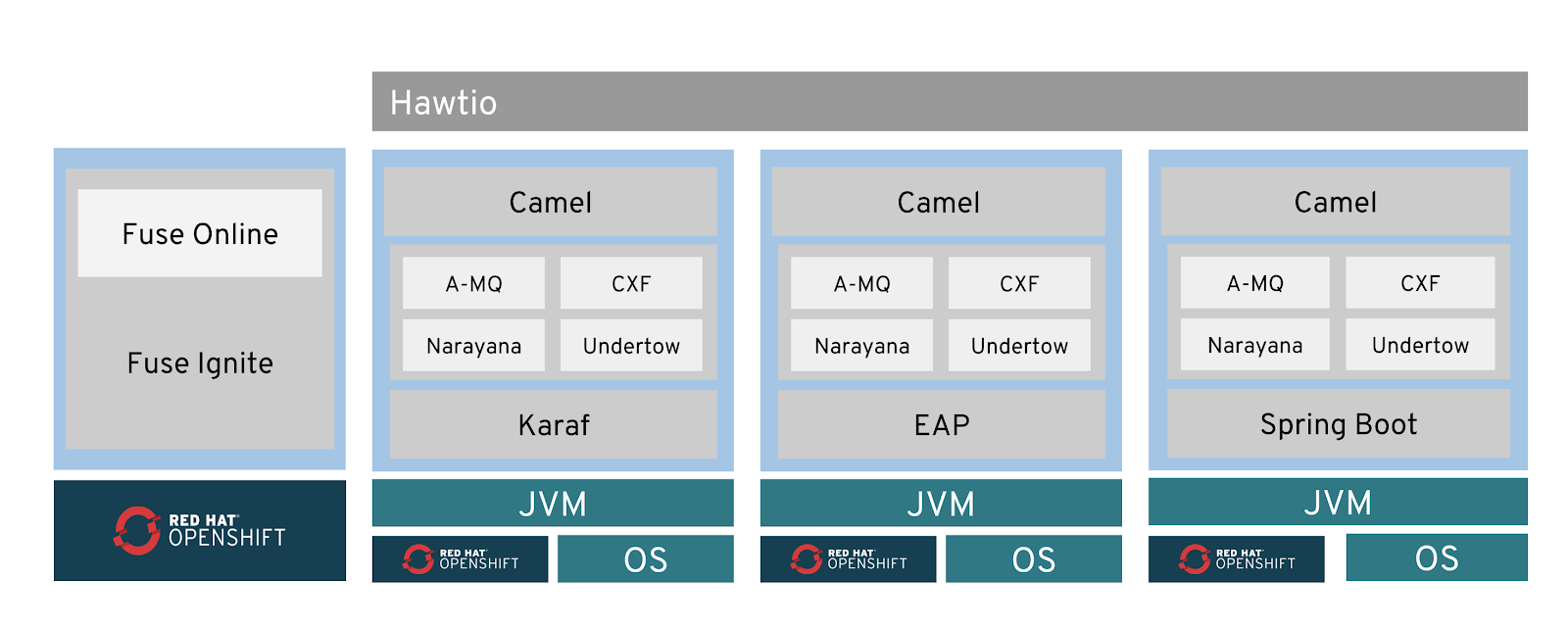
    Fuse 7

    Camel still is the core component in Fuse. Due to the complexity of integration solutions, a pattern-based integration solution is crucial for preventing developers from falling into complex, tangled, and spaghetti-like integration logic. Therefore, pre-built components and pre-defined patterns are always going to be the way to develop integration solutions, regardless of whether they are local or in the cloud.

    Narayana is now the transaction technology, to get you ready for handling more-complex distributed transactions.

    Jetty is deprecated and replaced by a more streamlined, lightweight web container: Undertow.

    One of the most common questions I get from people just getting started with Fuse is, "Why do you need to have so many different options for runtime?" It's because we believe developers should be able to choose what best suits them, for example:

    • Spring Boot for microservices
    • Karaf 4 for OSGi lover
    • Red Hat JBoss Enterprise Application Platform for Java EE developers

    A Cloud-Native Integration Platform

    Building cloud-native applications can be complicated. Integrating them as well as making the integration solution itself be cloud-ready is even more challenging. You need to address the entire software lifecycle as whole, for example, creating applications with a smaller footprint, automating the deployment flow, and monitoring applications in a distributed environment.  Because the Fuse 7 platform's features and technology that take care of much of this complexity, integration teams can now focus on the most important thing: the business logic of the integration application.

    Lightweight Development

    Building a small-footprint microservice/service is the most fundamental thing when it comes to moving integration into the cloud. Both the Spring Boot and Karaf runtimes are lightweight and microservices-enabled. Developers can take advantage of pattern-based integration in Camel, and plugins help developers package their integration application as a container to be cloud-ready.
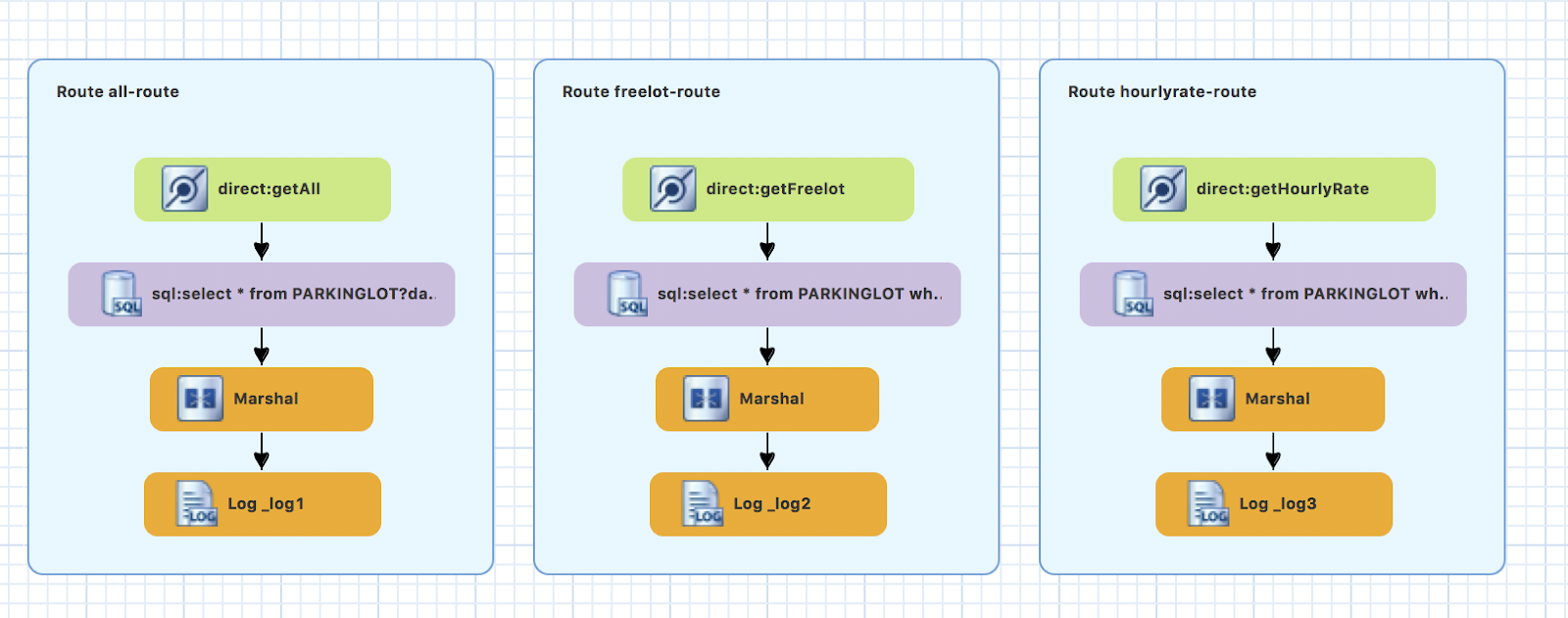
    Lightweight Development

    Hybrid Deployment  

    After deployment, Fuse 7 helps developers to package the application into immutable images. Based on your versioning and deployment strategy, these images can be tagged and sent along to be deployed in different stages of the environment. The platform also takes care of the availability, scalability, and resiliency for the application; scaling up and down the application require just a few clicks in the UI. Or, if you prefer to automate that, you can.  The application not only runs in the cloud, it can also be run as a single, standalone application. All three runtimes are available to run in both scenarios.
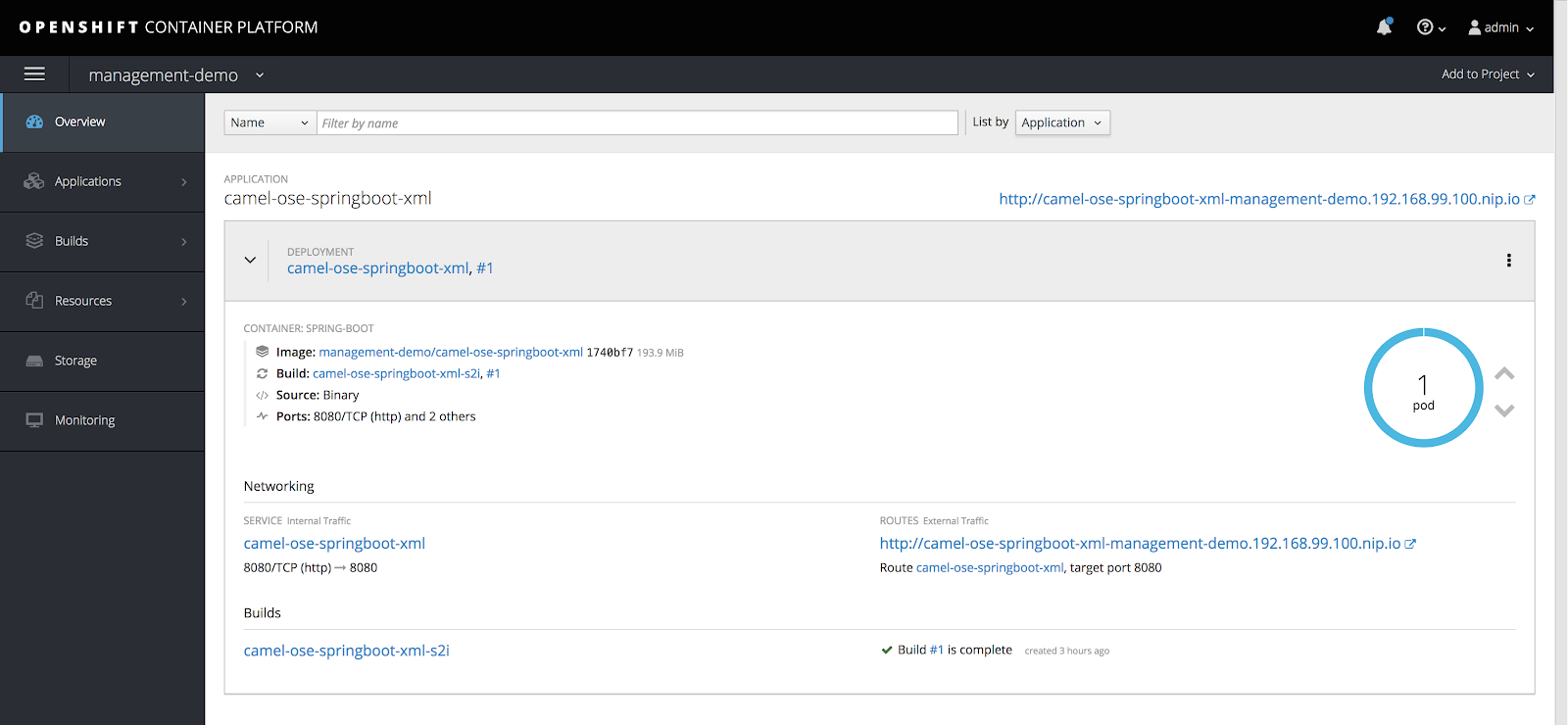
    Centralized Application View

    Management That Provides a Centralized Application View

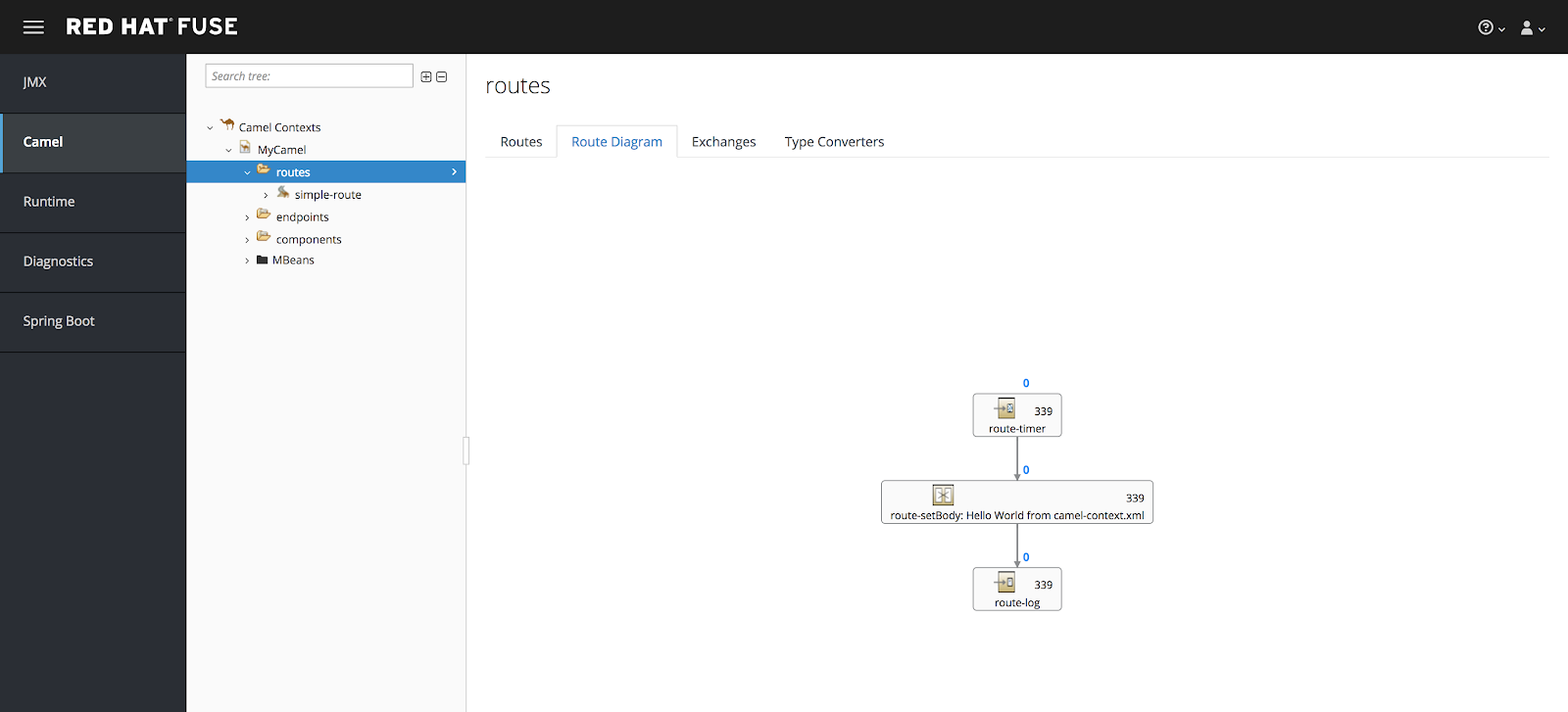
    Managing a distributed cloud environment is a nightmare: instead of a couple instances, you now have thousands of individual running instances. Fuse gives you a centralized viewing console in the cloud environment, so it will be much easier to locate all the running Fuse instances. Also, each running application is managed by Red Hat OpenShift, which provides comprehensive features for managing applications in the cloud.
    Citizen Integrators

    Low-Code Integration for Citizen Integrators

    Another new feature introduced in Fuse 7 is the Red Hat Fuse Online self-service platform, which allows citizen integrators to build integration services on their own. Fuse 7 allows a company to have a single, standardized platform instead of having multiple pieces of technology for different user characteristics, allowing maximum collaboration between developers and citizen integrators. With the intuitive interface and the highly customizable components' capabilities, citizen integrators can quickly deliver an integration solution without waiting for a developer's implementation. And developers can concentrate on developing more-complex integration logic and also package that into the platform so the citizen integrators can re-use it on the fly.

    When you log in to the platform, you will be greeted with an overview of all the available integrations and connectors as well as the status of the running integrations.

    Running Integrations

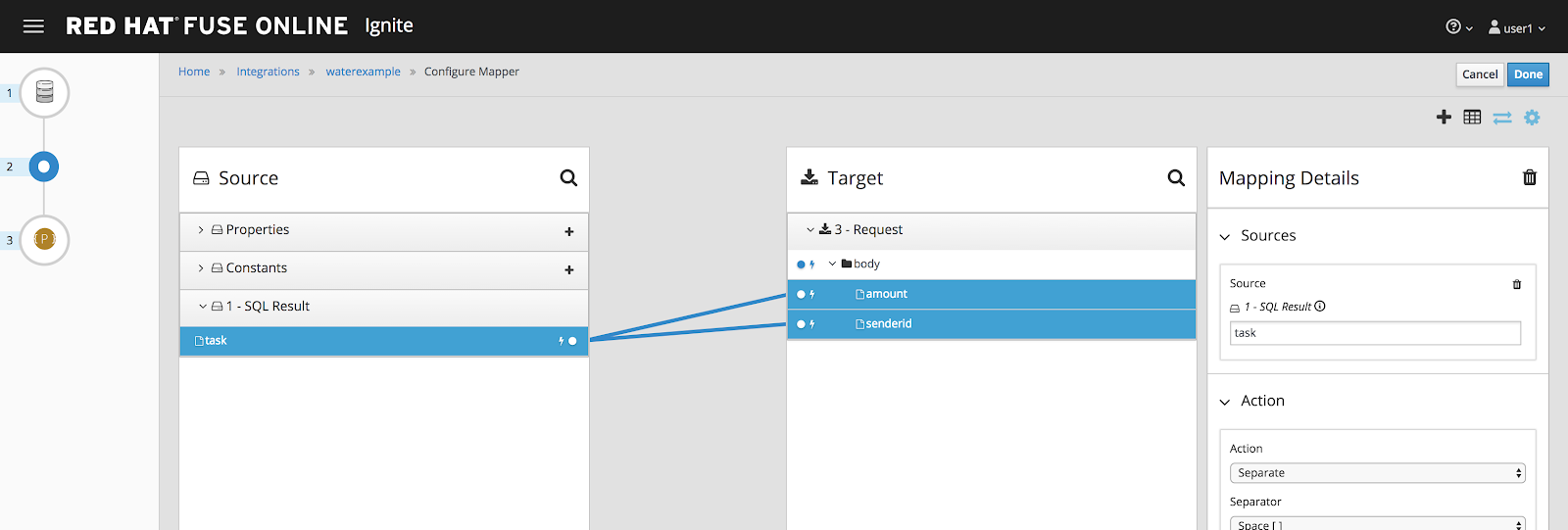
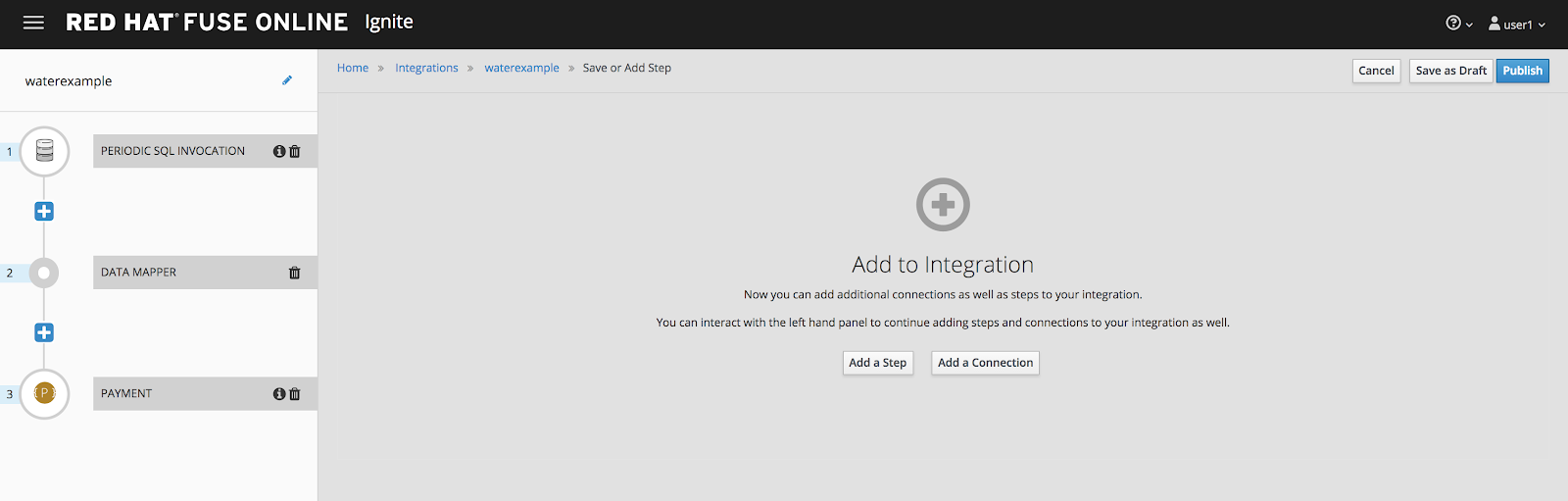
    Integrations allow an integrator to create an application by simply dragging and dropping the pre-built connectors or by mapping between input source and output target data.
    Output source Date

    Input source Date

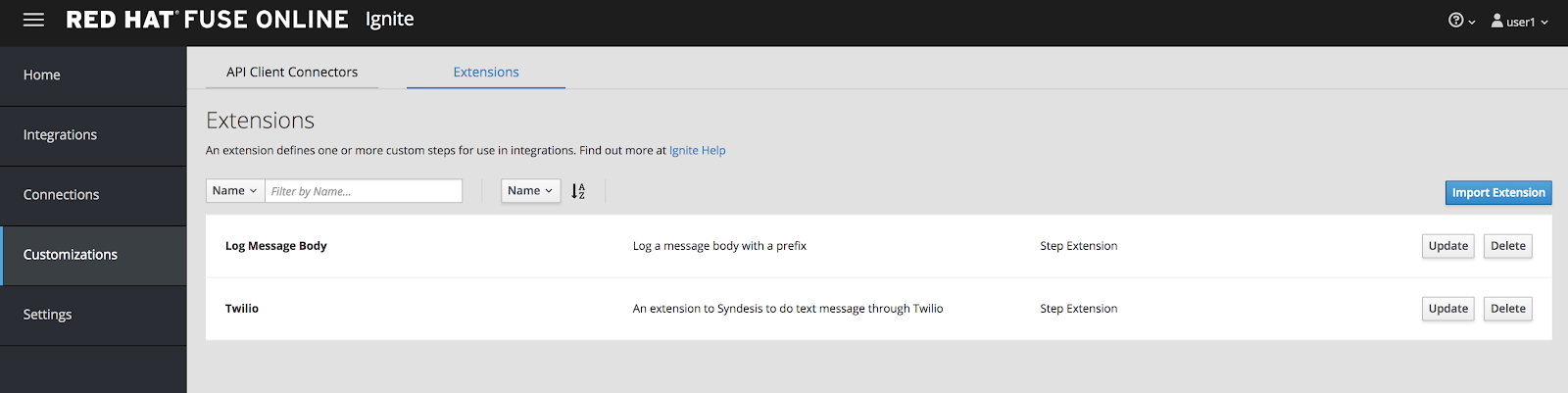
    When there is a need for more-complex process, you can also add customized connectors by simply importing the project package into the system. The customized connectors can be created by the in-house developer or provided online from our open source community.
    Open source Community

    Try Fuse 7 Now

    You can try the new version of the platform here:

    https://www.redhat.com/en/explore/fuse-online

    So what are you waiting for? Start your new Fuse 7 adventure today.

    Last updated: May 31, 2024

    Recent Posts

    • Securing multimodal AI with NeMo Guardrails and vision models

    • Scaling multicluster GitOps with argocd-agent and Red Hat Advanced Cluster Management for Kubernetes

    • JBoss EAP 8.2 Beta: Java SE 25 and automated provisioning

    • Chasing CVEs: Lessons from a real container build using Red Hat Hardened Images

    • Draining 10K VMs with Dirty Memory at 100-Node Scale

    Red Hat Developers logo

    Platforms

    • Red Hat AI
    • Red Hat Enterprise Linux
    • Red Hat OpenShift
    • Red Hat Ansible Automation Platform
    • See all products

    Build

    • Developer Sandbox
    • Developer tools
    • Interactive tutorials
    • API catalog

    Quicklinks

    • Learning resources
    • E-books
    • Cheat sheets
    • Blog
    • Events
    • Newsletter

    Communicate

    • About us
    • Contact sales
    • Find a partner
    • Report a website issue
    • Site status dashboard
    • Report a security problem

    Red Hat Developer

    Build here. Go anywhere.

    We serve the builders. The problem solvers who create careers with code.

    Join us if you’re a developer, software engineer, web designer, front-end designer, UX designer, computer scientist, architect, tester, product manager, project manager or team lead.

    Sign me up

    Red Hat legal and privacy links

    • About Red Hat
    • Jobs
    • Events
    • Locations
    • Contact Red Hat
    • Red Hat Blog
    • Inclusion at Red Hat
    • Cool Stuff Store
    • Red Hat Summit
    © 2026 Red Hat

    Red Hat legal and privacy links

    • Privacy statement
    • Terms of use
    • All policies and guidelines
    • Digital accessibility
    Ask AI