Redhat Developers  Logo
  • AI

    Get started with AI

    • Red Hat AI
      Accelerate the development and deployment of enterprise AI solutions.
    • AI learning hub
      Explore learning materials and tools, organized by task.
    • AI interactive demos
      Click through scenarios with Red Hat AI, including training LLMs and more.
    • AI/ML learning paths
      Expand your OpenShift AI knowledge using these learning resources.
    • AI quickstarts
      Focused AI use cases designed for fast deployment on Red Hat AI platforms.
    • No-cost AI training
      Foundational Red Hat AI training.

    Featured resources

    • OpenShift AI learning
    • Open source AI for developers
    • AI product application development
    • Open source-powered AI/ML for hybrid cloud
    • AI and Node.js cheat sheet

    Red Hat AI Factory with NVIDIA

    • Red Hat AI Factory with NVIDIA is a co-engineered, enterprise-grade AI solution for building, deploying, and managing AI at scale across hybrid cloud environments.
    • Explore the solution
  • Learn

    Self-guided

    • Documentation
      Find answers, get step-by-step guidance, and learn how to use Red Hat products.
    • Learning paths
      Explore curated walkthroughs for common development tasks.
    • Guided learning
      Receive custom learning paths powered by our AI assistant.
    • See all learning

    Hands-on

    • Developer Sandbox
      Spin up Red Hat's products and technologies without setup or configuration.
    • Interactive labs
      Learn by doing in these hands-on, browser-based experiences.
    • Interactive demos
      Click through product features in these guided tours.

    Browse by topic

    • AI/ML
    • Automation
    • Java
    • Kubernetes
    • Linux
    • See all topics

    Training & certifications

    • Courses and exams
    • Certifications
    • Skills assessments
    • Red Hat Academy
    • Learning subscription
    • Explore training
  • Build

    Get started

    • Red Hat build of Podman Desktop
      A downloadable, local development hub to experiment with our products and builds.
    • Developer Sandbox
      Spin up Red Hat's products and technologies without setup or configuration.

    Download products

    • Access product downloads to start building and testing right away.
    • Red Hat Enterprise Linux
    • Red Hat AI
    • Red Hat OpenShift
    • Red Hat Ansible Automation Platform
    • See all products

    Featured

    • Red Hat build of OpenJDK
    • Red Hat JBoss Enterprise Application Platform
    • Red Hat OpenShift Dev Spaces
    • Red Hat Developer Toolset

    References

    • E-books
    • Documentation
    • Cheat sheets
    • Architecture center
  • Community

    Get involved

    • Events
    • Live AI events
    • Red Hat Summit
    • Red Hat Accelerators
    • Community discussions

    Follow along

    • Articles & blogs
    • Developer newsletter
    • Videos
    • Github

    Get help

    • Customer service
    • Customer support
    • Regional contacts
    • Find a partner

    Join the Red Hat Developer program

    • Download Red Hat products and project builds, access support documentation, learning content, and more.
    • Explore the benefits

What's New in OpenShift GitOps 1.22

October 6, 2026
Sho Weimer Gerald Nunn
Related topics:
GitOps
Related products:
Red Hat OpenShift GitOps

    GitOps is now the definitive standard for managing Kubernetes cluster configuration and applications. Red Hat continues to see the widespread adoption of the GitOps methodology across our portfolio as customers look for ways to increase efficiency in their operations and development teams.

    Red Hat is pleased to announce that version 1.22 of OpenShift GitOps has been released, bringing with it some exciting new capabilities.

    New in version 1.22

    GitOps Promoter 0.35 (Technical Preview)

    A challenge organizations face when adopting a GitOps methodology is how to effectively manage environment promotions of manifests. In this release GitOps Promoter 0.35 is included, it enables organizations to manage the promotion process using a simple PromotionStrategy CR to define the environments and any required gating.
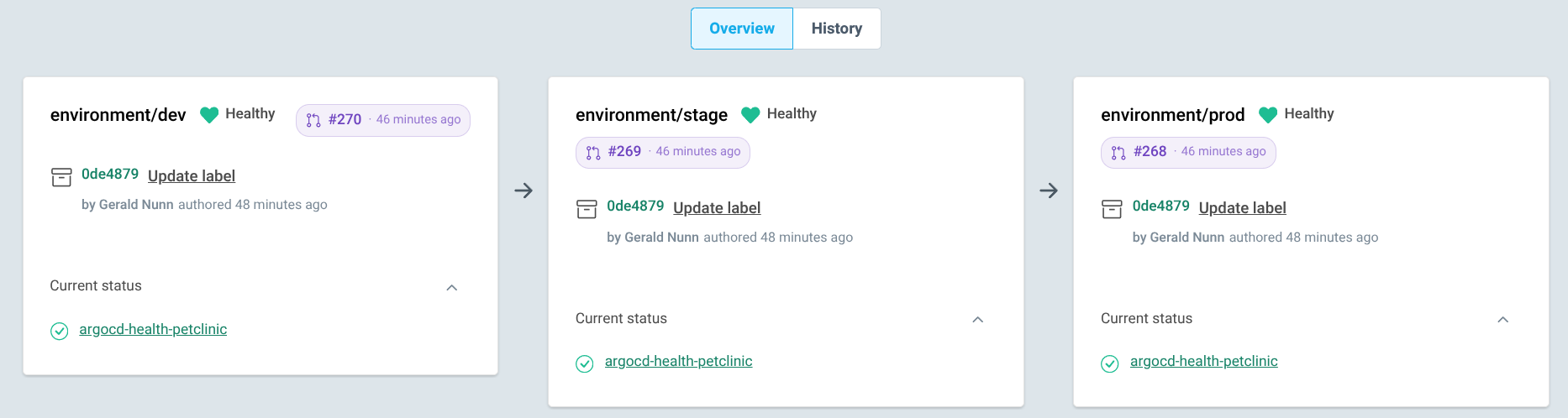
    GitOps Promoter
    GitOps Promoter

    Note that you will need to provide a certificate for the promoter-apiservice otherwise the pod will not start. The easiest way to do so is to leverage the OpenShift serving service to provide a certificate. To do so, after enabling the promoter run the following command:

    oc annotate service argocd-promoter-apiserver service.beta.openshift.io/serving-cert-secret-name=argocd-promoter-apiserver-tls

    Next update the ArgoCD.spec.promoter configuration to specify the certificate that is created by the service as per this example:

    apiVersion: argoproj.io/v1beta1
    kind: ArgoCD
    metadata:
      name: argocd
      namespace: argocd
    spec:
      promoter:
        apiserver:
          enabled: true
          tls:
            caSecretKey: tls.key
            caSecretName: argocd-promoter-apiserver-tls
            certSecretName: argocd-promoter-apiserver-tls
        argoCDUIExtensionEnabled: true
        enabled: true
        webhook:
          enabled: true

    Argo CD Source Hydrator (Technical Preview)

    The Argo CD Source Hydrator implements the Rendered Manifest pattern by automating the rendering template-based "DRY" sources (e.g. Helm or Kustomize) into fully hydrated YAML manifests and commits them back to Git prior to cluster deployment. Benefits include:

    • Full Diff Auditability: Provides complete visibility into exact, pre-rendered YAML changes directly in Git prior to sync.
    • Deterministic Deployments: Eliminates sync failures caused by tool version mismatches or dynamic rendering issues.
    • Image Updater Integration:  Seamlessly triggers hydration workflows when Argo CD Image Updater updates image tags in DRY source repos.

    Additionally the GitOps Promoter operates on distinct environment branches where changes in the DRY branch must be copied into the environment preview branches. The Argo CD Source Hydrator automates this process simplifying the adoption of the GitOps Promoter.

    Impersonation Support in Application Syncs (Technical Preview)

    In multi-tenant Argo CD, the application-controller Kubernetes ServiceAccount requires the highest permissions of the most privileged tenant. While the access provided by this Account can be mitigated via Argo CD Projects, Impersonation enables organizations to provide tailored ServiceAccounts with the exact Kubernetes RBAC permissions required by each tenant to enhance isolation.

    In previous releases Impersonation only applied to the Sync operation, however in Argo CD 3.5 the scope of this feature has been expanded to include other operations as per the migration notes.

    Important: Argo CD Projects remain an important part of the overall Argo CD security landscape and is not replaced by Impersonation. Users must continue to configure resource restrictions. 

    ApplicationSets-In-Any-Namespace

    ApplicationSets-In-Any-Namespace have entered General Availability. This feature joins Applications-In-Any-Namespace in enabling tenants to fully manage their own Argo CD resources outside of the Argo CD installation namespace. This enables tenants to fully manage these resources declaratively and not be bound to managing them imperatively via the Argo CD UI or CLI.

    OpenShift Console Plugin for OpenShift GitOps

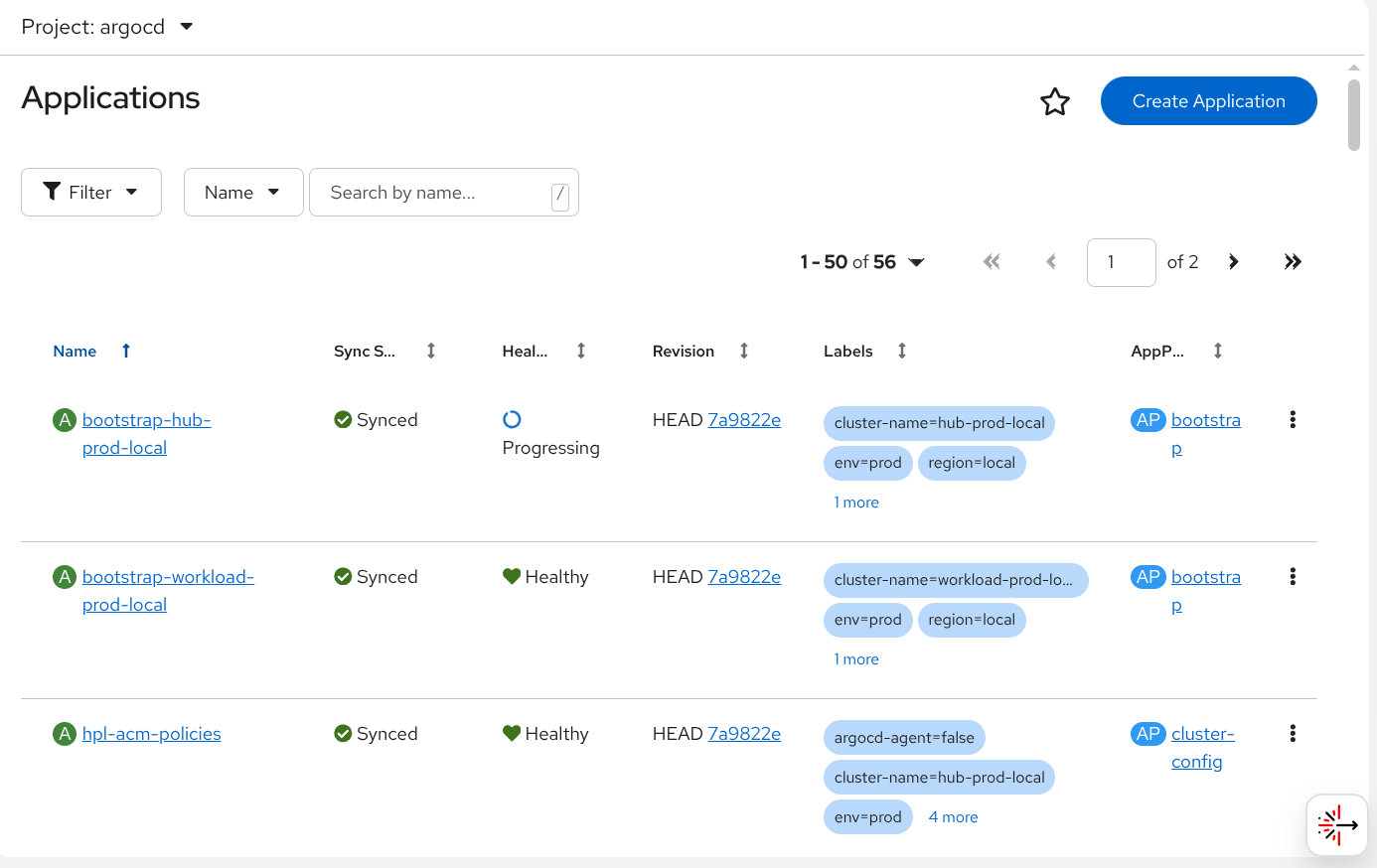
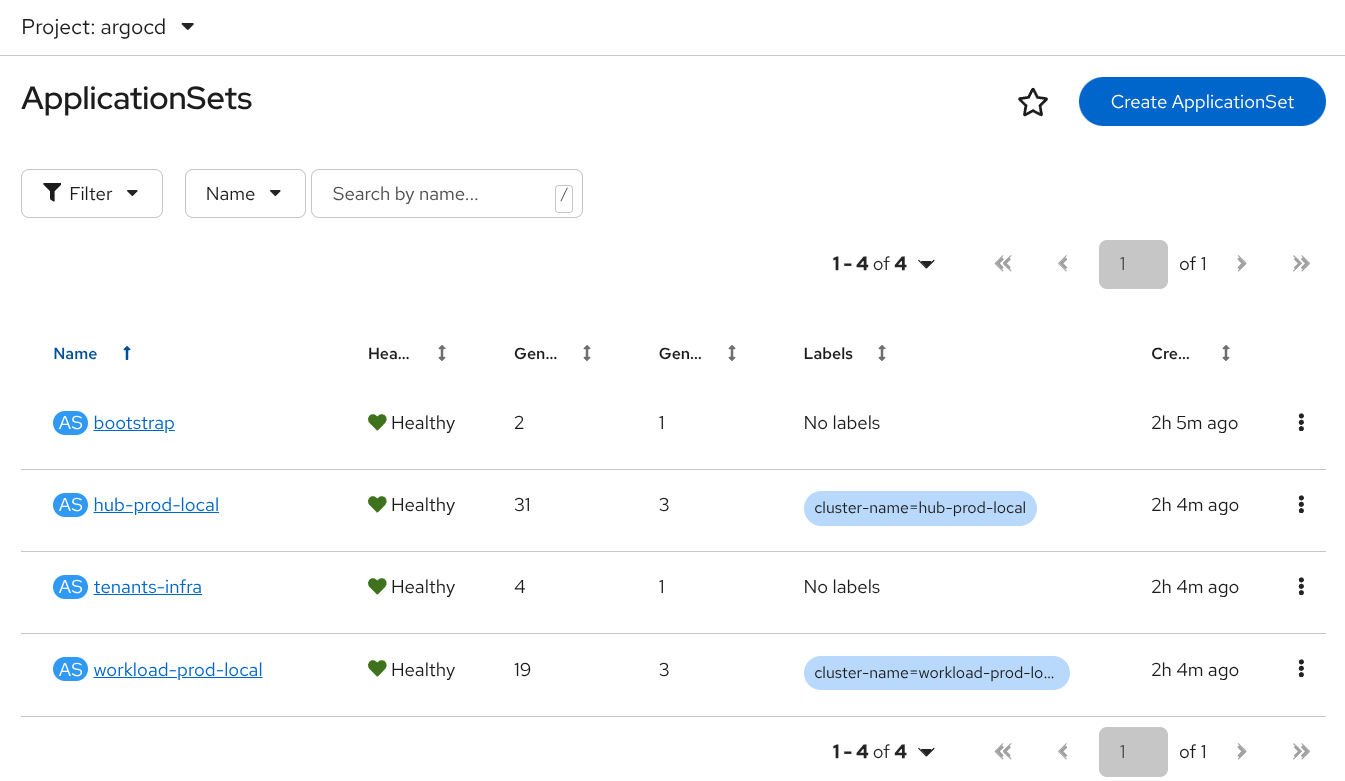
    In this release, the OpenShift Console Plugin for OpenShift GitOps enters General Availability. This plugin provides a user interface within the OpenShift Console to manage various GitOps resources including:

    • Applications
    • ApplicationSets
    • AppProjects
    • ImageUpdater
    • Rollouts


    Applications - OpenShift GitOps Console
    Applications - OpenShift GitOps Console


    ApplicationSets - OpenShift GitOps Console
    ApplicationSets - OpenShift GitOps Console

    Source Integrity Verification

    The Source Integrity Verification enters General Availability, this enables validating and restricting Application syncs based on configured source integrity criteria.

    • Cryptographic Signing: Enforce Git commits and tags use valid GnuPG signatures before syncing.
    • Block Unverified Changes: Prevents unauthorized or untampered code from deploying by validating against trusted Key IDs.
    • Per-Source Controls: Configurable via AppProject definitions, allowing distinct verification rules for multi-source applications.

    This feature will replace the previous GnuPG Signature Verification feature as per the migration notes. While the GnuPG Signature Verification will continue to function as a legacy feature in this release, users are encouraged to upgrade to the Source Integrity Verification feature.

    Argo CD 3.5

    This version upgrades Argo CD to 3.5 from 3.4 that was used in the previous version OpenShift GitOps 1.21. Some of the changes in Argo CD 3.5 to be aware of include:

    • Support for Helm 4 has been included

    • A new UI for ApplicationSets in the Argo CD UI is now available as a Technical Preview feature.
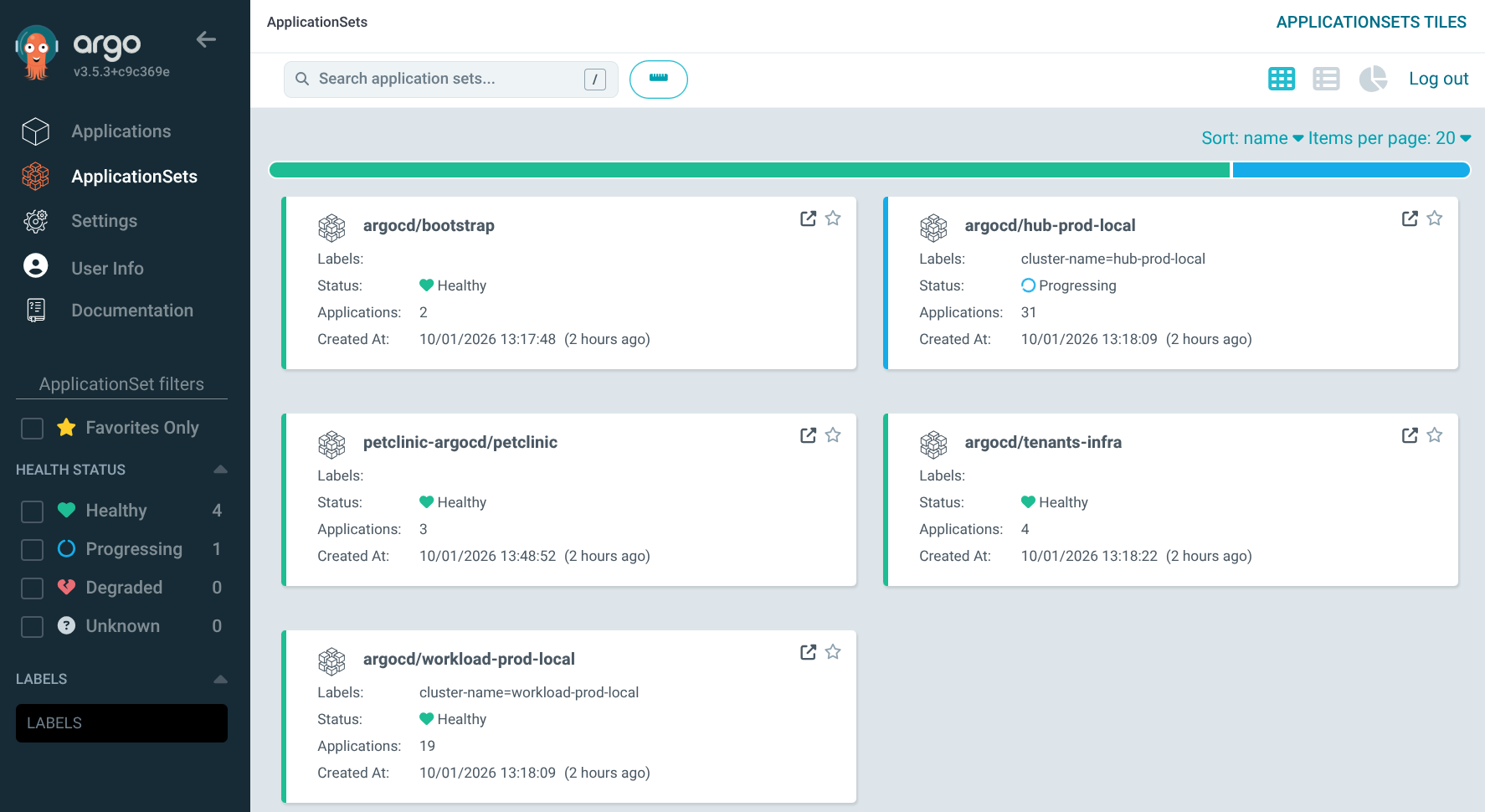
    ApplicationSets - Argo CD UI
    ApplicationSets - Argo CD UI

    The upstream release blog for Argo CD 3.5 is available here and changes to be aware of between 3.4 and 3.5 can be found here.

    Conclusion

    OpenShift GitOps 1.22 is a significant update with many new features, to learn more about this update please review the official documentation and release notes.

    Disclaimer: Please note the content in this blog post has not been thoroughly reviewed by the Red Hat Developer editorial team. Any opinions expressed in this post are the author's own and do not necessarily reflect the policies or positions of Red Hat.

    Recent Posts

    • What's New in OpenShift GitOps 1.22

    • Declarative clusters: GitOps deployment of hosted control planes on Red Hat OpenShift Virtualization

    • Rossoctl for agent discoverability, security, and observability on Kubernetes

    • Kafka Monthly Digest: September 2026

    • Why your non-root container dropped its capabilities (and how to fix it)

    Red Hat Developers logo LinkedIn YouTube Twitter Facebook

    Platforms

    • Red Hat AI
    • Red Hat Enterprise Linux
    • Red Hat OpenShift
    • Red Hat Ansible Automation Platform
    • See all products

    Build

    • Developer Sandbox
    • Developer tools
    • Interactive tutorials
    • API catalog

    Quicklinks

    • Learning resources
    • E-books
    • Cheat sheets
    • Blog
    • Events
    • Newsletter

    Communicate

    • About us
    • Contact sales
    • Find a partner
    • Report a website issue
    • Site status dashboard
    • Report a security problem

    RED HAT DEVELOPER

    Build here. Go anywhere.

    We serve the builders. The problem solvers who create careers with code.

    Join us if you’re a developer, software engineer, web designer, front-end designer, UX designer, computer scientist, architect, tester, product manager, project manager or team lead.

    Sign me up

    Red Hat legal and privacy links

    • About Red Hat
    • Jobs
    • Events
    • Locations
    • Contact Red Hat
    • Red Hat Blog
    • Inclusion at Red Hat
    • Cool Stuff Store
    • Red Hat Summit
    © 2026 Red Hat

    Red Hat legal and privacy links

    • Privacy statement
    • Terms of use
    • All policies and guidelines
    • Digital accessibility
    Ask AI