Red Hat JBoss xPaaS services for OpenShift
Red Hat announces its vision for xPaaS -- platform as a service for the enterprise. For more information: http://red.ht/xpaas
Intro to OpenShift Express (Windows) - This video demonstrates how to install the OpenShift Express client utilities on the Windows operating system using cygwin. Furthermore, it provides a walk through of signing up for an RHN account using the OpenShift website and details steps to allow a user to create their first express domain. Please go to openshift.redhat.com for more details.
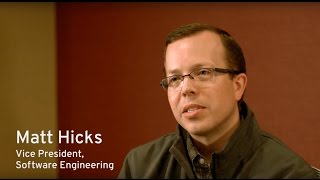
Matt HIcks introduces Linux containers and explains why developers should care about them.
Speaker: Diogenes Rettori
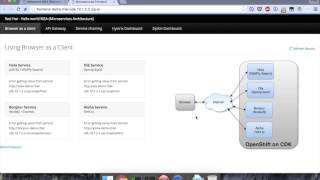
A lot of functionality necessary for running in a microservices architecture have been built into Kubernetes; why would you re-invent the wheel with lots of complicated client-side libraries? Have you ever asked why you should use containers and what are the benefits for your application? This talk will present a microservices application that have been built using different Java platforms: WildFly Swarm and Eclipse Vert.x. Then we will deploy this application in a Kubernetes cluster to present the advantages of containers for MSA (Microservices Architectures) and DevOps. The attendees will learn how to create, edit, build, deploy Java Microservices, and also how to perform service discovery, rolling updates, persistent volumes and much more. Finally we will fix a bug and see how a CI/CD Pipeline automates the process and reduces the deployment time.
This panel will bring together developers that understand the benefits of containers technologies, to clarify their importance, their problems, and how to apply to real world projects.
With microservices, polyglot, and DevOps on the rise, where are we at with testing? Does it bring more complexity and make our testing effort harder? Or maybe, on the contrary, it actually helps us write better tests more easily? This session explores not only how we can do our testing in this new world but also how the new world can help us test better. Meet Arquillian Cube and Q. The presentation takes a close look at topics ranging from polyglot services and orchestrated microservices to system scale testing. All are within reach. And with full control, let’s add a dash of chaos!
Everyone's heard about Docker and how it's going to solve all of our problems, or not. In this session, we'll walk you through using Docker and discuss why using a scheduler and orchestration system is important. Then we'll dive into an actual usage of the container application platform, OpenShift Enterprise 3 by Red Hat, to show how it makes both Docker and Kubernetes accessible to the average human being. We'll keep the slides to a minimum and instead focus on live demo/coding/deployments. After deploying several containers, we'll turn up the heat by showcasing scaling and moving on to deployment strategies including blue/green.
Are you ready to innovate with cloud-native app development? Are you ready to accelerate business agility with continuous delivery (CD)? Well, now you can easily do both using CloudBees Jenkins Platform within OpenShift Dedicated by Red Hat. In this session, you'll learn how to seamlessly use this CD solution to fully automate your application development, test, and delivery life cycle. Using the CloudBees platform to automate your CD pipelines allows your developers to focus on what they do best—innovating. Combine that with the elasticity and scale of the Docker-based OpenShift Dedicated environment, and you'll remove many of the obstacles to business growth. Come see the future of digital innovation.
Aslak Knutsen & Bartosz Majsak: The production system has been targeted by troublesome random failures over a long period of time, and countless hours of debugging has yielded no valuable results. We're close to throwing in the towel. An army of Chaos Monkeys has been deployed in an attempt to force the issue, but no solution is in sight. We need to take back control. It's time to meet the Assertable Chaos Monkey, Arquillian Cube Q. Arquilian Cube Q is an extension that gives you full control over a production-like system right from the comfort of your IDE. In this session, we'll explore some of the things you can do when you have control over the whole system. We'll validate scalability and connectivity, assert the failure state, enforce service responses, and more.
Containers: they’re all the rage. But you need to stay grounded in trusted technology such as Java and .NET. Wouldn’t it be great if someone showed an example of bringing Java and .NET and containers together? Oh, and don’t be limited to just one technology stack. Well, this is that session. I’ll be using as many technologies as we can cram into 60 minutes to show how open source brings the old and new together to make both even better. You won’t want to miss this.
Despite the popularity and hype of containers, there is no need to regard containers as a block box. It is important to have an awareness of what's going on under the hood to help optimize your container requirements. In this session, we'll discuss: - Namespacing in the kernel - Copy-on-write storage choices - Portable container formats - Available container alternatives - Validation, trust, and content addressability with image verification See examples and options for your use-cases.
This session will take an in-depth look at the recently announced Red Hat Mobile Application Platform 4.0. Re-architected as a suite of containerized microservices, we'll look at how the platform uses OpenShift 3 both as an execution environment for the platform and a hosting environment for mobile developers. We'll then look at how this microservices architecture applies to mobile app development and to their role the whole way through the development stack. Finally, we'll take a look at a hands-on demo using the Red Hat Mobile Application Platform to deploy a Mobile Backend-as-a-Service (MBaaS) onto an OpenShift by Red Hat instance and how to use it to deploy mobile microservices.
Scale changes everything. What once was quite adequate for enterprise messaging can't scale to support "Internet of Things". We need new protocols, patterns and architectures to support this new world. This session will start with basic introduction to the concept of Internet of Things. Next it will discuss general technical challenges involved with the concept and explain why it is becoming mainstream now. Now we’re ready to start talking about solutions. We will introduce some messaging patterns (like telemetry and command/control) and protocols (such as MQTT and AMQP) used in these scenarios. Finally we will see how Apache ActiveMQ is gearing up for this race. We will show tips for horizontal and vertical scaling of the broker, related projects that can help with deployments and what the future development road map looks like.
As application systems move to Platform-as-a-Service (PaaS) environments and every source code change results in a full build, a simple change can easily take minutes. This is much longer than developers are willing to wait to verify a change. And working in the cloud shouldn't mean loss of control and visibility into how an application is working. In this session, we'll cover how OpenShift by Red Hat works closely with Red Hat JBoss Developer Studio to let you push code directly to a container, see your changes as you make them, debug live in deployment, and much more.
Red Hat's Ju Lim and Serena Doyle of the User Experience Design Team walk us through the dashboard for Kubernetes clusters and OpenShift V3 in CloudForms
John Frizelle walks us thru the seamless integration of OpenShift and Red Hat Mobile Application Platform. A very accessible technical talk on the entire workflow from code to fully deployed mobile application.
Overview of Shippable's CI/CD integration for OpenShift 3 with a technical deep dive demo, followed by Q/A with OpenShift Commons Participants.
OpenShift V3 Beta 4 Training Session With Erik Jacobs (Red Hat) In this OpenShift V3 Beta 3 Training Briefing, Red Hat's Erik Jacobs explains the Operations Workflows for both CLI and Console.
OpenShift Commons Briefing: Continuous Development with JRebel on OpenShift with Adam Koblentz (ZeroTurnAround) & Arun Gupta (Red Hat)
OpenShift Commons Briefing: Scheduling Pods for High Availability with Abhishek Gupta (Red Hat
Lesson Learned at OpenShift Online (http://openshift.com); insights into Operational Monitoring at OpenShift.com, use of Zabbix, Puppet, Ansible. Nagios and even collectd! A great presentation by Red Hat's Thomas Wiest.
OpenShift Commons Briefing: OpenShift V3 Features Update with Joe Fernandes
OpenShift Commons Briefing on V3 Release by Mike Barrett of Red Hat
30 minutes overview on OpenShift V3 and Storage presented by Mark Turansky, Red Hat engineer and moderated by Mike Barrett Red Hat OpenShift Product Manager