
Article
Get started with Jenkins CI/CD in Red Hat OpenShift 4
Learn how to build an automated integration and delivery pipeline using Jenkins CI/CD and Red Hat OpenShift 4.0 in this tutorial.
Learn how to build an automated integration and delivery pipeline using Jenkins CI/CD and Red Hat OpenShift 4.0 in this tutorial.

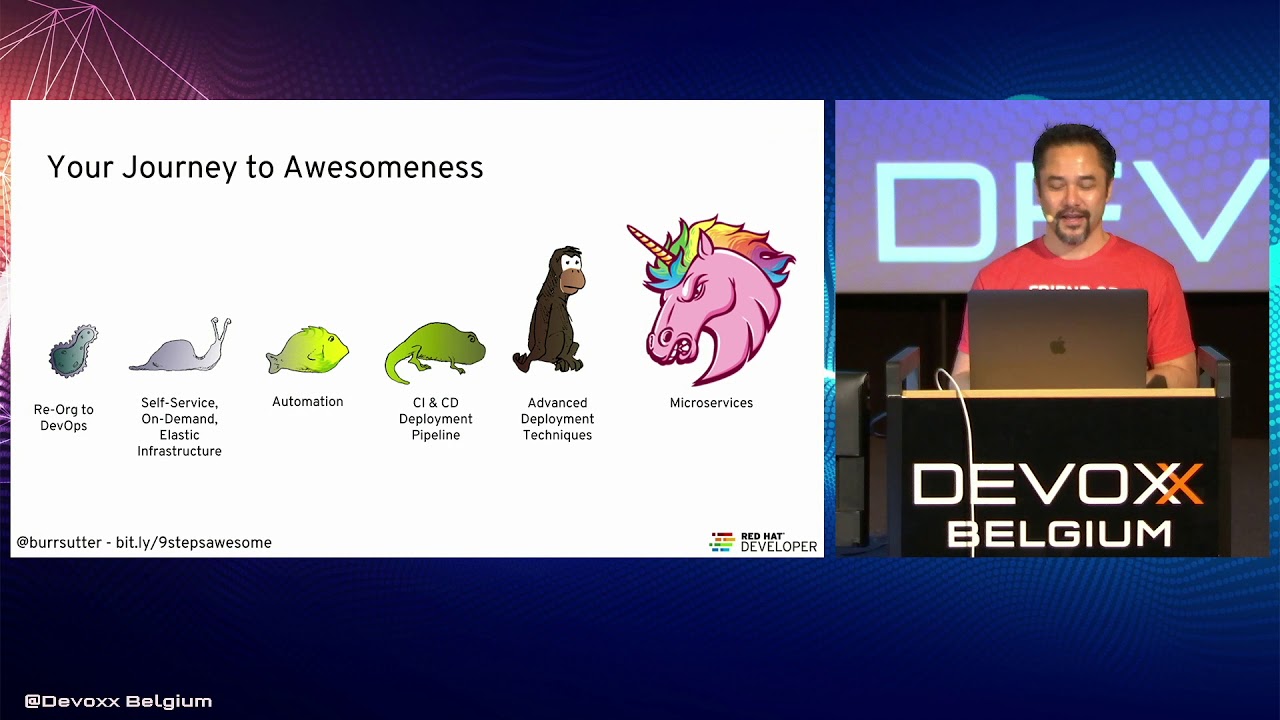
Everybody seems to be rocking with Kubernetes! Even your favorite repos at GitHub are running on top of it. Don't be the last developer/architect to board this bullet train. Come and learn a LOT in this session about Kubernetes - from getting started to staying productive. We will provide numerous practical tips & techniques that will take you from cloud newbie to cloud native.

In this article, we'll show how to use Red Hat Fuse 7 on Spring Boot for new integration platforms on Red Hat OpenShift Container Platform.

In this article, we show how and why to run systemd in a container using Podman.

Learn how easy it is to use Quiver to interact with AMQ Broker and AMQ Interconnect on Red Hat OpenShift Container Platform with this demo.

Build Your "Hello World" Container Using C#.After reading the previous blog post in this series, "Containers, kubernetes, microservices: Start here", you're now ready to build your first "Hello World" application and run it in a container. For this, we'll be using C#.
Build Your "Hello World" Container Using Node.js.After reading the previous blog post in this series, "Containers, kubernetes, microservices: Start here", you're now ready to build your first "Hello World" application and run it in a container. For this, we'll be using Node.js.
Build Your "Hello World" Container Using Ruby.After reading the previous blog post in this series, "Containers, kubernetes, microservices: Start here", you're now ready to build your first "Hello World" application and run it in a container. For this, we'll be using Ruby with Sinatra.

This tutorial walks through the prerequisites, requirements, and process steps for installing Red Hat OpenShift 3.11 on OpenStack 13.

Learn how the new incremental build feature of the S2I .NET Core builder can reduce build times by reusing packages from a previously built image.

Get details on how to successfully perform a Red Hat OpenShift 3.11 disconnected installation using Satellite Docker registry.

Red Hat OpenShift Application Runtimes (RHOAR) is a recommended set of products, tools, and components for developing and maintaining cloud-native applications on the Red Hat OpenShift platform. As part of this offering, Red Hat is extending its support to Spring Boot 2 and related frameworks for building modern, production-grade, Java-based cloud-native applications.

This article describes a set of full API lifecycle management activities that can guide your API initiatives from an idea to the realization, from the inception of an API program up to management at scale throughout your whole company.

Red Hat AMQ Online gives developers cloud-like self-service access to messaging services running on their organization's own infrastructure.

This article, which is the first in a series of three articles, describes how the new Red Hat Integration bundle allows citizen integrators to quickly provide an API through tools that make creating an API in five simple steps effortless.
Part 1 of a two-part series, explores techniques that enable the portability of containers across different environments.Through these techniques, you may be able to use the same language, framework, or tool used in your datacenter straight to the IoT edge, even with different CPU architectures.

Kubernetes may be the new application server for some, but not all Java apps. This article discusses the choices: traditional app servers, "just enough app server" choices like Thorntail, and Kubernetes.

Second half of a walk-through using Red Hat CodeReady Workspaces to develop a Java EE application in the cloud using JBoss EAP. It shows how to configure a workspace, use JBoss EAP for deploying and debugging, and how to create a factory so that the development environment can be shared with others who need to collaborate on the project.
Walkthrough of using Red Hat CodeReady Workspaces to develop a Java EE application using JBoss EAP. It gives details on how to bring your own tools, configure your workspace with helpful commands for JBoss EAP, and share everything for easily onboarding new developers.

Part 6 of Eric Schabell's integration series covers the storage elements of a generic architectural blueprint for the omnichannel customer experience use case.
This article, which is part 3 of a series about deploying modern web apps on Red Hat OpenShift, shows how to run your app's development server on OpenShift while syncing with your local file system.

Part 3 of a series about using a container platform for automated performance testing. It covers how to automate and orchestrate the provisioning of an environment and the execution of performance tests.

Build here. Go anywhere.
We serve the builders. The problem solvers who create careers with code.
Join us if you’re a developer, software engineer, web designer, front-end designer, UX designer, computer scientist, architect, tester, product manager, project manager or team lead.
