
Digital Evangelist
Don Schenck
Polyglot with a focus on OpenShift. Speaker and author (books, blogs, cheat sheets). Microsoft MVP.
Don Schenck's contributions
Learning path
Update OpenShift applications with zero downtime using a single command
The Red Hat OpenShift Container Platform allows you to perform rolling updates of existing running applications. This feature, which is native to Kubernetes, means you can spin up a different version of an application—newer or older—than the current one, and have the traffic automatically routed to it. When done correctly, this can be used to create a zero-downtime deployment. Put more succinctly: Kubernetes (and OpenShift) allow you to update an application with one simple command. This Developer Sandbox learning path...
Learning path
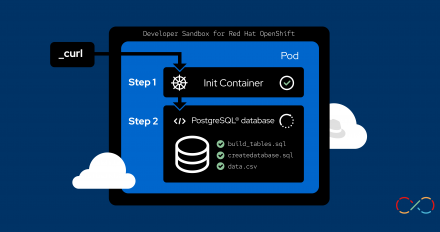
Build and populate a database using Kubernetes init containers
You can build and populate a database that is running in Red Hat OpenShift in a
Learning path
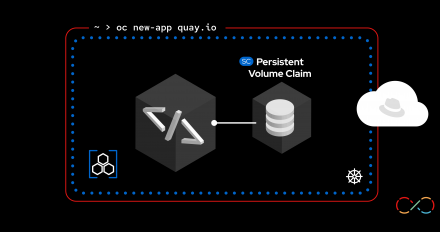
Store persistent data in Red Hat OpenShift using PVCs
Without data, software has no value. Data needs to be created, stored, updated
Learning path
How to deploy full-stack JavaScript applications in OpenShift
Red Hat OpenShift is a Kubernetes distribution that makes it easy to deploy and
Learning path
Container development using Podman, Podman Desktop, and Kubernetes
Podman Desktop is a lightweight and efficient tool for managing containers and
Learning path
Using Red Hat OpenShift labels
When the microservices architecture began replacing monolithic architecture, it
Learning path
Foundations of OpenShift
Learn the foundations of OpenShift through hands-on experience deploying and
Article
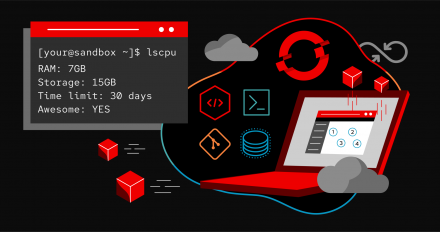
Bringing the Developer Sandbox to you at Red Hat Summit
Get to know the Developer Sandbox for Red Hat OpenShift in this Red Hat Summit lightning talk. Experiment with containers, Kubernetes, microservices, and more.

Update OpenShift applications with zero downtime using a single command

Build and populate a database using Kubernetes init containers
You can build and populate a database that is running in Red Hat OpenShift in a

Store persistent data in Red Hat OpenShift using PVCs
Without data, software has no value. Data needs to be created, stored, updated

How to deploy full-stack JavaScript applications in OpenShift
Red Hat OpenShift is a Kubernetes distribution that makes it easy to deploy and

Container development using Podman, Podman Desktop, and Kubernetes
Podman Desktop is a lightweight and efficient tool for managing containers and

Using Red Hat OpenShift labels
When the microservices architecture began replacing monolithic architecture, it

Foundations of OpenShift
Learn the foundations of OpenShift through hands-on experience deploying and

Bringing the Developer Sandbox to you at Red Hat Summit
Get to know the Developer Sandbox for Red Hat OpenShift in this Red Hat Summit lightning talk. Experiment with containers, Kubernetes, microservices, and more.

