AI
  • Get started with AI

    • Red Hat AI

      Accelerate the development and deployment of enterprise AI solutions.

    • AI learning hub

      Explore learning materials and tools, organized by task.

    • AI interactive demos

      Click through scenarios with Red Hat AI, including training LLMs and more.

    • AI/ML learning paths

      Expand your Red Hat OpenShift AI knowledge using these learning resources.

    • AI quickstarts

      Focused AI use cases designed for fast deployment on Red Hat AI platforms.

    • No-cost AI training

      Foundational Red Hat AI training.

  • Featured resources

    • Red Hat OpenShift AI
    • Open source AI for developers
    • AI product application development
    • Open source-powered AI/ML for hybrid cloud
    • AI and Node.js cheat sheet

Red Hat AI Factory with NVIDIA

Red Hat AI Factory with NVIDIA is a co-engineered, enterprise-grade AI solution for building, deploying, and managing AI at scale across hybrid cloud environments.

Learn
  • Self-guided

    • Documentation

      Find answers, get step-by-step guidance, and learn how to use Red Hat products.

    • Learning paths

      Explore curated walkthroughs for common development tasks.

    • Guided learning

      Receive custom learning paths powered by our AI assistant.

    • See all learning
  • Hands-on

    • Developer Sandbox

      Spin up Red Hat's products and technologies without setup or configuration.

    • Interactive labs

      Learn by doing in these hands-on, browser-based experiences.

    • Interactive demos

      Click through product features in these guided tours.

  • Browse by topic

    • AI/ML
    • Automation
    • Java
    • Kubernetes
    • Linux
    • See all topics
  • Training & certifications

    • Courses and exams
    • Certifications
    • Skills assessments
    • Red Hat Academy
    • Learning subscription
    • Explore training
Build
  • Get started

    • Red Hat build of Podman Desktop

      A downloadable, local development hub to experiment with our products and builds.

    • Developer Sandbox

      Spin up Red Hat's products and technologies without setup or configuration.

  • Download products

    • Red Hat Enterprise Linux
    • Red Hat AI
    • Red Hat OpenShift
    • Red Hat Ansible Automation Platform
    • See all products
  • Featured

    • Red Hat build of OpenJDK
    • Red Hat JBoss Enterprise Application Platform
    • Red Hat OpenShift Dev Spaces
    • Red Hat Developer Toolset
  • References

    • E-books
    • Documentation
    • Cheat sheets
    • Architecture center
Community
  • Get involved

    • Events
    • Live AI events
    • Red Hat Summit
    • Red Hat Accelerators
    • Community discussions
  • Follow along

    • Articles & blogs
    • Developer newsletter
    • Videos
    • Github
  • Get help

    • Customer service
    • Customer support
    • Regional contacts
    • Find a partner

Join the Red Hat Developer program

Download Red Hat products and project builds, access support documentation, learning content, and more.

ConsoleDocsSupport Search
New For you

Recommended

We'll recommend resources you may like as you browse. Try these suggestions for now.

  • Product downloads
  • Cheat sheets
  • Red Hat Developer learning portal
  • Developer blog
  • E-books
  • Developer Sandbox
Log in

Get more with a Red Hat Developer account

  • Product downloads
  • Console access
  • Event registration
  • Training & trials
Explore more account benefitsLog in or register

A subscription may be required for some services.

Contact us

Blueprint for Modern Application Architecture

May 3, 2017
Brian Atkisson
Related topics:
SecurityMicroservices
Related products:
Red Hat 3scale API Management

    ... with APIs, OpenID, and Microservices, Daria Mayorova and Mark Cheshire from Red Hat 3Scale shared their presentation on how to construct microservice-based applications with the benefits of API management.

    Some general characteristics of microservices include:

    • componentization via service
    • organized around business capabilities
    • smart endpoints
    • design for failure
    • decoupling of components

    Typically, microservices are divided into to two general architectural buckets:

    Inner Architecture

    Any service communication with other microservices within a larger service boundary (think intra-application communication).

    Outer Architecture

    Border boundary where API consumers will hit these endpoints, typically exposed outside of the application.  API management should be considered here in order to provide a better developer experience while maintaining API security.

    API Management

    API Management Key Benefits

    • Standard API keys
    • Application ID and key pair
    • Different microservice consumer segments
    • Rate limiting
    • Flexible per-time-period limits
    • Usage analytics
    • API documentation
    • Possible monetization of API service

    Red Hat's take on API management is 3Scale.

    Adapting API Management to your endpoint typically means adding the API gateway in front of your outer architecture boundary.  These can be somewhat squishy concepts, but it is important to take a middle-of-the-road approach.  That is, apply API management where it makes sense from a business and service perspective. You don't typically need API gateways within your inner architecture APIs unless those too are exposed to a wider audience.

    API Security

    API security has evolved over the last few years, building on previous iterations to provide more flexible and enterprise-ready solutions.  This security moved from naked APIs to simple API keys, now to federated access control.

    API federated access control is usually based on OAuth and OpenID Connect protocols. These bring in another layer to the microservice architecture, which is the identity provider.
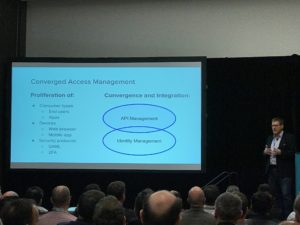
    Placing OAuth and/or OpenID Connect around your API gives you a robust, standards-based method to authenticate your users without having to mess with API keys.  Red Hat Single Sign On can provide SAML, OAuth and OpenID Connect identity services for your application.

    Putting it all together

    Combining Red Hat 3Scale and Red Hat Single Sign On gives you a robust and scalable solution to provide API management for your microservices.  If building exposed API endpoints, consider using an API management platform and a federated identity solution.


    You can download Red Hat 3scale API Management Platform's technical overview.

    Last updated: September 3, 2019

    Recent Posts

    • A day in the life of an NVIDIA H100 on Red Hat OpenShift 5

    • Migrate BuildConfigs to builds for Red Hat OpenShift with one plug-in install

    • Run Red Hat Enterprise Linux CoreOS on NVIDIA BlueField DPUs

    • Agent harness engineering: Separating model capabilities from enforcement

    • What's new for developers in Red Hat Enterprise Linux 10.3 and 9.9

    Red Hat Developers logo

    Platforms

    • Red Hat AI
    • Red Hat Enterprise Linux
    • Red Hat OpenShift
    • Red Hat Ansible Automation Platform
    • See all products

    Build

    • Developer Sandbox
    • Developer tools
    • Interactive tutorials
    • API catalog

    Quicklinks

    • Learning resources
    • E-books
    • Cheat sheets
    • Blog
    • Events
    • Newsletter

    Communicate

    • About us
    • Contact sales
    • Find a partner
    • Report a website issue
    • Site status dashboard
    • Report a security problem

    Red Hat Developer

    Build here. Go anywhere.

    We serve the builders. The problem solvers who create careers with code.

    Join us if you’re a developer, software engineer, web designer, front-end designer, UX designer, computer scientist, architect, tester, product manager, project manager or team lead.

    Sign me up

    Red Hat legal and privacy links

    • About Red Hat
    • Jobs
    • Events
    • Locations
    • Contact Red Hat
    • Red Hat Blog
    • Inclusion at Red Hat
    • Cool Stuff Store
    • Red Hat Summit
    © 2026 Red Hat

    Red Hat legal and privacy links

    • Privacy statement
    • Terms of use
    • All policies and guidelines
    • Digital accessibility
    Ask AI