AI
  • Get started with AI

    • Red Hat AI

      Accelerate the development and deployment of enterprise AI solutions.

    • AI learning hub

      Explore learning materials and tools, organized by task.

    • AI interactive demos

      Click through scenarios with Red Hat AI, including training LLMs and more.

    • AI/ML learning paths

      Expand your Red Hat OpenShift AI knowledge using these learning resources.

    • AI quickstarts

      Focused AI use cases designed for fast deployment on Red Hat AI platforms.

    • No-cost AI training

      Foundational Red Hat AI training.

  • Featured resources

    • Red Hat OpenShift AI
    • Open source AI for developers
    • AI product application development
    • Open source-powered AI/ML for hybrid cloud
    • AI and Node.js cheat sheet

Red Hat AI Factory with NVIDIA

Red Hat AI Factory with NVIDIA is a co-engineered, enterprise-grade AI solution for building, deploying, and managing AI at scale across hybrid cloud environments.

Learn
  • Self-guided

    • Documentation

      Find answers, get step-by-step guidance, and learn how to use Red Hat products.

    • Learning paths

      Explore curated walkthroughs for common development tasks.

    • Guided learning

      Receive custom learning paths powered by our AI assistant.

    • See all learning
  • Hands-on

    • Developer Sandbox

      Spin up Red Hat's products and technologies without setup or configuration.

    • Interactive labs

      Learn by doing in these hands-on, browser-based experiences.

    • Interactive demos

      Click through product features in these guided tours.

  • Browse by topic

    • AI/ML
    • Automation
    • Java
    • Kubernetes
    • Linux
    • See all topics
  • Training & certifications

    • Courses and exams
    • Certifications
    • Skills assessments
    • Red Hat Academy
    • Learning subscription
    • Explore training
Build
  • Get started

    • Red Hat build of Podman Desktop

      A downloadable, local development hub to experiment with our products and builds.

    • Developer Sandbox

      Spin up Red Hat's products and technologies without setup or configuration.

  • Download products

    • Red Hat Enterprise Linux
    • Red Hat AI
    • Red Hat OpenShift
    • Red Hat Ansible Automation Platform
    • See all products
  • Featured

    • Red Hat build of OpenJDK
    • Red Hat JBoss Enterprise Application Platform
    • Red Hat OpenShift Dev Spaces
    • Red Hat Developer Toolset
  • References

    • E-books
    • Documentation
    • Cheat sheets
    • Architecture center
Community
  • Get involved

    • Events
    • Live AI events
    • Red Hat Summit
    • Red Hat Accelerators
    • Community discussions
  • Follow along

    • Articles & blogs
    • Developer newsletter
    • Videos
    • Github
  • Get help

    • Customer service
    • Customer support
    • Regional contacts
    • Find a partner

Join the Red Hat Developer program

Download Red Hat products and project builds, access support documentation, learning content, and more.

ConsoleDocsSupport Search
New For you

Recommended

We'll recommend resources you may like as you browse. Try these suggestions for now.

  • Product downloads
  • Cheat sheets
  • Red Hat Developer learning portal
  • Developer blog
  • E-books
  • Developer Sandbox
Log in

Get more with a Red Hat Developer account

  • Product downloads
  • Console access
  • Event registration
  • Training & trials
Explore more account benefitsLog in or register

A subscription may be required for some services.

Contact us

Building Containerized IoT solutions on OpenShift Lab

<p>&nbsp;</p> <quillbot-extension-portal></quillbot-extension-portal>

June 29, 2017
Ishu Verma
Related topics:
Kubernetes
Related products:
Red Hat OpenShift Container Platform

    As technology continues to disrupt the industries beyond the first wave (led by Netflix, Amazon, Uber etc.), the enterprises are embracing digital transformation to meet the challenge. One of the key technologies enabling digital transformation is Containers through its inherent advantages with packaging (Atomic, built for CI/CD), collaboration and runtime (lightweight, distributable, portable).

    At the Red Hat Summit in Boston, Andrew Block and I conducted a hands-on lab on how to build a containerized intelligent Internet-of-Things (IoT) gateway on Red Hat OpenShift. The application is deployed as a set of microservices inside containers on the containerize IoT workload using microservices running on Red Hat OpenShift Container Platform.

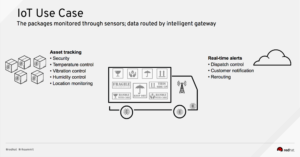
    IoT use case - Asset Tracking

    The use case for this lab represents a logistics company that wants to monitor high-value, fragile and time critical assets and take corrective actions in real time to protect these assets. Each package category (e.g. organs, delicate machine equipment etc) has its own threshold of optimum environmental conditions.

    The packages will be monitored for temperature, vibration, light, and location data. The sensors transmit the data to an intelligent IoT gateway that will transform, store, and forward this data for further processing.  If the threshold of the environmental condition is crossed for a package, an alert will be sent to trigger a corrective action.

    Companies looking to build a modern IoT solution on the enterprise-grade OpenShift container platform can use the methodology used in this lab.

    The core components of the lab include:

    • Red Hat JBoss Fuse Integration Services (FIS): Tools that facilitate integration, routing, and transformation of messages and protocols, by leveraging Apache Camel technology.
    • Red Hat JBoss A-MQ: Apache ActiveMQ-based message broker container image for receiving and storing telemetry from the sensor via the MQTT protocol.
    • Apache Zeppelin: Interactive data visualization and analytics.
    • PostgreSQL: Provides persistence for sensor data.
    • Simulated Software Sensor: A simple Spring Boot application that simulates temperature, vibration, light, and GPS sensor data.


    Lab Workflow

    In the lab exercises, the participants created the project in OpenShift, instantiated (using templates) and then deployed the applications. Once all the applications were running successfully, the Zeppelin visualization tool was configured to visualize the sensor data.
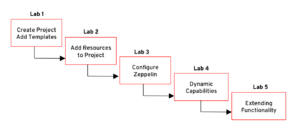
    Participants also learned how to use ConfigMap to dynamically enhance the functionality of the software sensor to enable a new sensor type.

    As the number of end devices or volume of sensor data increases over time, OpenShift can auto-scale the resources to keep the business functions running without human intervention.

    For those interested in recreating this lab, all the code and documentation is available on Github.

    Last updated: May 31, 2023

    Recent Posts

    • A day in the life of an NVIDIA H100 on Red Hat OpenShift 5

    • Migrate BuildConfigs to builds for Red Hat OpenShift with one plug-in install

    • Run Red Hat Enterprise Linux CoreOS on NVIDIA BlueField DPUs

    • Agent harness engineering: Separating model capabilities from enforcement

    • What's new for developers in Red Hat Enterprise Linux 10.3 and 9.9

    What’s up next?


    Red Hat Developers logo

    Platforms

    • Red Hat AI
    • Red Hat Enterprise Linux
    • Red Hat OpenShift
    • Red Hat Ansible Automation Platform
    • See all products

    Build

    • Developer Sandbox
    • Developer tools
    • Interactive tutorials
    • API catalog

    Quicklinks

    • Learning resources
    • E-books
    • Cheat sheets
    • Blog
    • Events
    • Newsletter

    Communicate

    • About us
    • Contact sales
    • Find a partner
    • Report a website issue
    • Site status dashboard
    • Report a security problem

    Red Hat Developer

    Build here. Go anywhere.

    We serve the builders. The problem solvers who create careers with code.

    Join us if you’re a developer, software engineer, web designer, front-end designer, UX designer, computer scientist, architect, tester, product manager, project manager or team lead.

    Sign me up

    Red Hat legal and privacy links

    • About Red Hat
    • Jobs
    • Events
    • Locations
    • Contact Red Hat
    • Red Hat Blog
    • Inclusion at Red Hat
    • Cool Stuff Store
    • Red Hat Summit
    © 2026 Red Hat

    Red Hat legal and privacy links

    • Privacy statement
    • Terms of use
    • All policies and guidelines
    • Digital accessibility
    Ask AI